Roofing for Cities, Counties and Public Agencies in Prescott Valley, AZ
Roof condition sheets, bid-ready scopes and storm response for towns, counties and public agencies in Prescott Valley, AZ, with photos that stand up to audit.
Ask for the roof file on your oldest public building and count the pages. One warranty letter, one invoice and a note from a past leak make a common file. A file that thin is the first problem to solve. In Prescott Valley, AZ, we write the missing record, with photographs, a plan, listed findings and a price per item, so a new staff member or an auditor can read it in ten minutes.
Public work runs on rules. Bids must compare. Money must be traced. A roof sheet built for that world looks different from one built for a private owner.
What public roofs turn up
Public buildings vary a lot: a library with skylights, a recreation center with a long gym span, a maintenance yard with a metal shop, a public works building with equipment on the roof, a senior center with rooftop units on a low-slope roof.
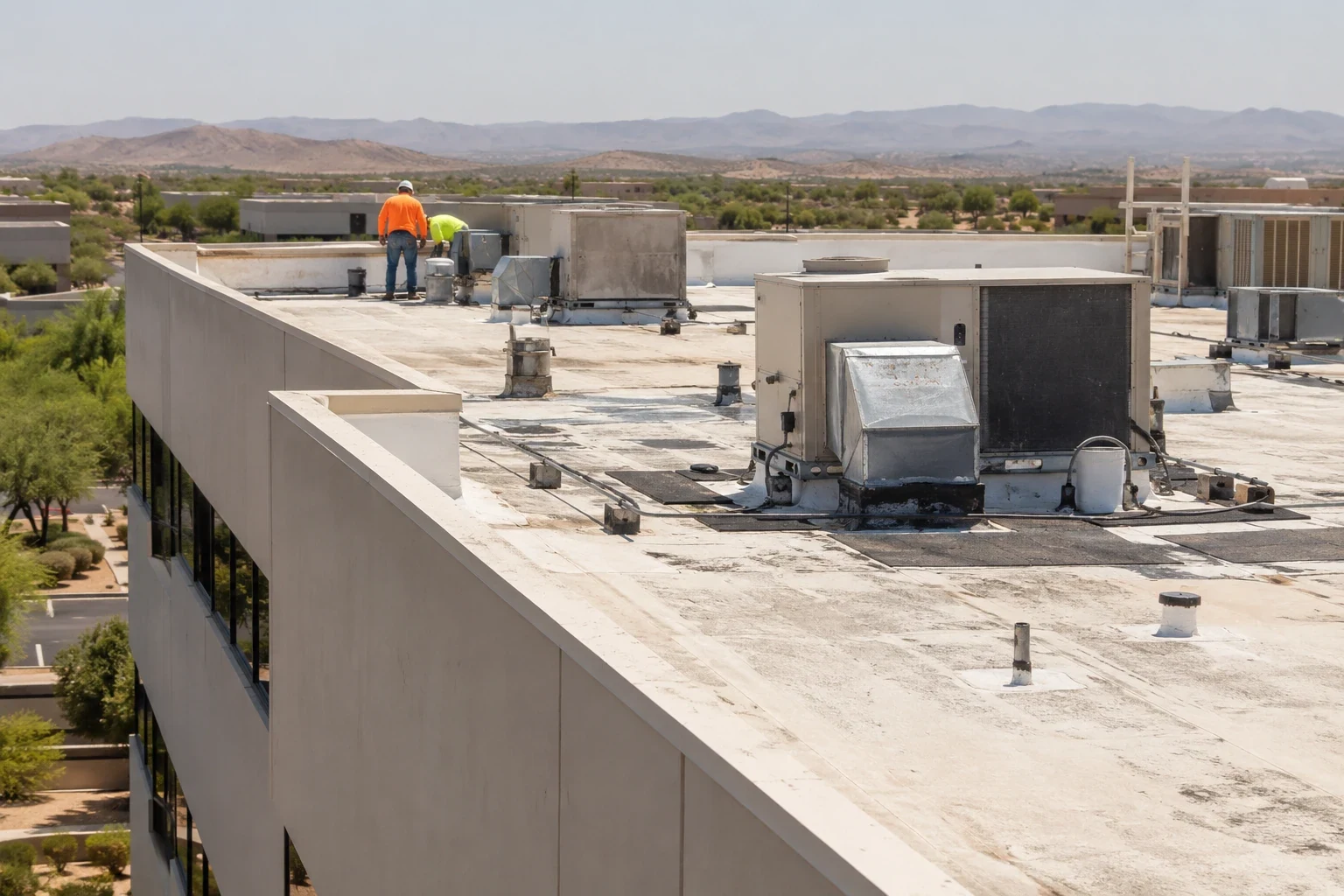
The same items come up across them. Drain screens packed with gravel and leaves. Curb seals gone dry. Pipe boots cracked by the sun. Flashing pulled from walls. Old patches that stopped holding. Walk routes worn through the surface where vendors cross.
The bigger pattern lives in the file. Repairs follow leaks and then stop, nobody holds a schedule, and small items pile up until a roof is past its life and the budget request lands as a surprise. A sheet that ranks the buildings and prices the work fixes.
Location changes wind load. Buildings near Glassford Hill see ridge-top gusts that a building out on the flats along State Route 69 may not. A town that holds buildings in both spots needs different edge checks, and each building's exposure goes on the sheet, so a council understands why two similar roofs get different notes.
Vendors are the other source of damage. A public works roof is walked by electricians, HVAC crews and telecom installers, and none of them work for the agency's roofer. A sign-in log on the roof hatch costs nothing, lets us match each puncture to a visit and lets the agency ask a vendor to cover the repair.
Public buildings across the county
Prescott is the Yavapai County seat, and its downtown carries the Whiskey Row historic district, where brick buildings put many roofs on historic masonry. Public buildings in the Prescott area may need details that match old walls, and the sheet records the parapet, the cap and the drain at each.
Out in Chino Valley, which had 13,020 residents in 2020 and sits about 15 miles north of Prescott, the town lies along State Highway 89, and Yavapai College operates a campus there. A county or town building there takes its own look at the parapet, the drains and the edge metal, since the sheet is written building by building. Dewey-Humboldt, about 15 miles east of Prescott, is smaller, and its early twentieth-century Main Street buildings stand under a smelter smokestack.
The sheet notes the elevation next to each building. Chino Valley sits near 4,734 feet, while Prescott Valley sits near 5,100.
Monsoon, power loss and winter
Prescott Valley receives about 15 inches of precipitation a year, most of it in July and August, and a cell can deliver rain, gusts and pea-sized hail inside ten minutes. When one crossed town on July 20, 2026, power failed for more than 130 APS customers.
Public buildings that serve in an emergency need roofs that hold when the power is out, so those get checked first. Drains, edges and curb seals get a walk before monsoon starts.
Winter wears on seams. Freezing mornings begin around October 21 and run until about May 1, and daily swings near thirty degrees move flashings. An autumn walk catches the open edge ahead of the first hard frost.
Writing a scope that survives a bid
A public scope must be clear enough to bid and open enough to compare. We state the roof area, the existing system and the findings, then list the work as numbered items with quantities: linear feet of flashing, counts of curbs and drains, square feet of membrane.
Alternates sit on separate lines, such as added insulation, a cover board or better edge metal, so the agency can take or leave each one against the money available. Exclusions are written down, along with what a hidden condition would change and how it is priced.
The photos and the moisture map travel with the scope as exhibits. If an addendum comes, the original photos still show what was visible on bid day, which protects the agency and the bidder. Roof condition reports are written to attach to a bid package as they stand.
A town can also lease space, as when a property management company has a public agency as its tenant. The same sheet settles who pays, since the photos show what the roof looked like at lease start.
What to repair now and what can wait
Repair now: active leaks, wet insulation over records or equipment, packed drains and failed flashing. Anything that puts public service or public records at risk goes first.
Repair soon: brittle boots, dried sealant, bare cable runs. Lower-risk wear is logged with a date to revisit.
Funding arrives in pieces, so the order matters. A roof capital plan ranks the buildings and spreads replacement over several years. A town or county with many sites can adopt a multi-site roof program, one method and one report format, so a council compares a library with a shop on the same terms.
What to ask for in writing
The sheet for each building should come with photos and a roof plan, prices on each item with quantities, the exclusions and alternates, and a statement of what each repair does to any warranty.
Schedule and access matter too. Secure sites need escorts, tool counts and set hours, and public buildings need to stay open, so the plan lists sections, dates and contacts.
A preventive maintenance visit each spring and fall keeps the repair-now list short. School districts fit the same plan into summer break, and a single government building follows the same sheet on a smaller scale.
Commercial Roofing Questions
Can your sheet support a purchasing request?
Yes. It lists items with quantities, prices and photos. Your purchasing office decides the form and the contract path, and every line is clear enough for bidders to compare, with alternates kept separate.
How do you handle a roof on an essential building?
Work moves in small sections, each dried in the same day. The forecast is watched and covers are staged. If a monsoon cell is likely, the crew closes the open area first. Essential spaces stay protected, and a staff contact is on site.
What records should an agency keep?
Dated photos, a roof plan, invoices, warranty papers and each findings sheet. One folder is enough if the next person can find it, and the sheet and photos arrive in a format that drops straight into it.
Can a recover go over the old roof on a public building?
It can, provided the old roof is dry and the deck is firm. Core cuts and a moisture scan decide. Certain agencies want a full tear-off for a clean record, so both options are priced and the agency chooses.
What if the agency has no roof records at all?
We build them from a walk, a plan, dated photos, core cuts where allowed and a drain count. That first sheet becomes the baseline, and later visits show change against it.
Request a walk-through
Ask for a walk-through of your public building roofs. We will send a written findings sheet with photos before we price any repair, and we will write the scope so it fits your bid process.
Request a Roof Assessment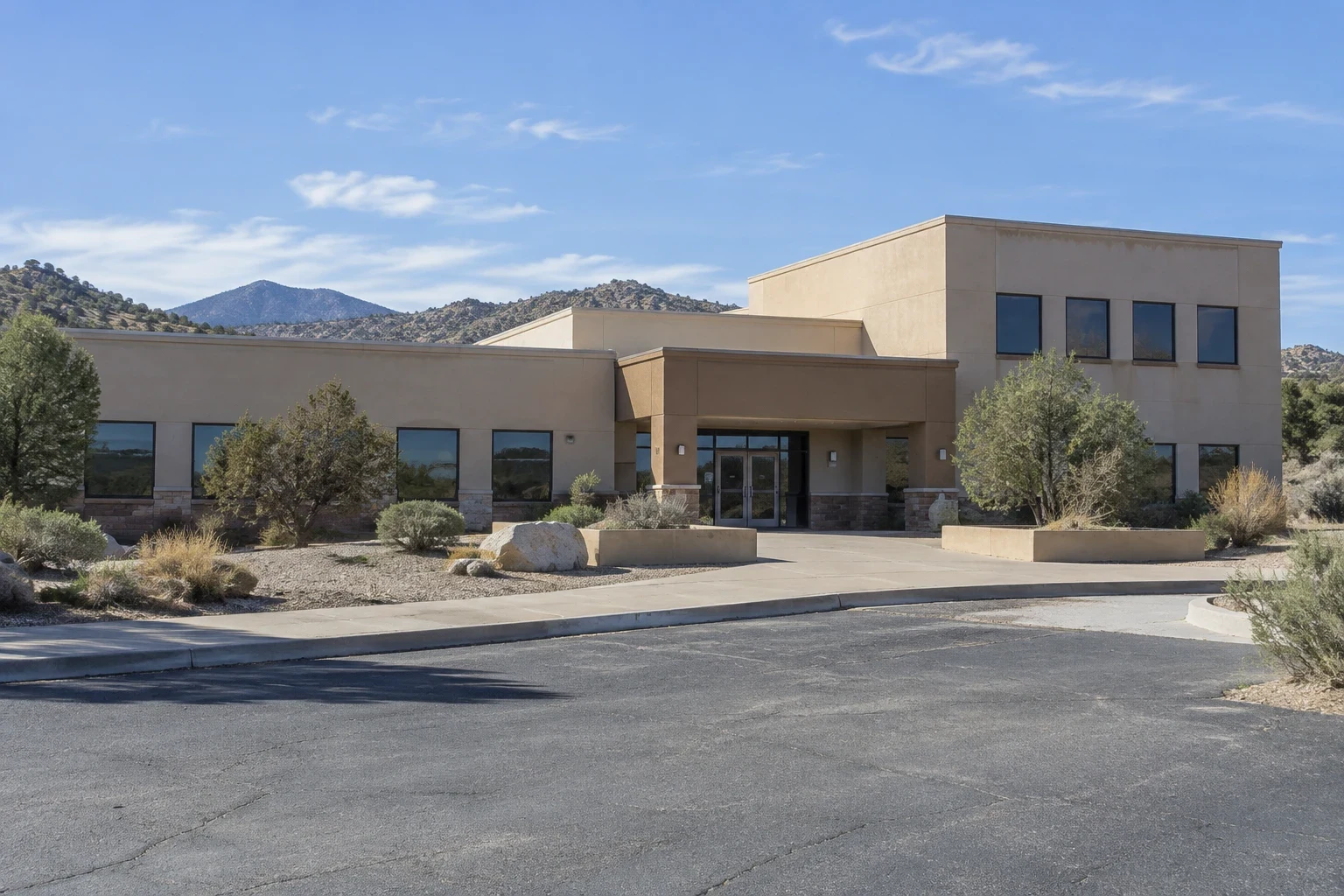
Commercial Roofing Questions
Yes. It lists items with quantities, prices and photos. Your purchasing office decides the form and the contract path, and every line is clear enough for bidders to compare, with alternates kept separate.
Work moves in small sections, each dried in the same day. The forecast is watched and covers are staged. If a monsoon cell is likely, the crew closes the open area first. Essential spaces stay protected, and a staff contact is on site.
Dated photos, a roof plan, invoices, warranty papers and each findings sheet. One folder is enough if the next person can find it, and the sheet and photos arrive in a format that drops straight into it.
It can, provided the old roof is dry and the deck is firm. Core cuts and a moisture scan decide. Certain agencies want a full tear-off for a clean record, so both options are priced and the agency chooses.
We build them from a walk, a plan, dated photos, core cuts where allowed and a drain count. That first sheet becomes the baseline, and later visits show change against it.