Johns Manville Roofing Systems in Prescott Valley, AZ
Core cuts, moisture checks and repairs for Johns Manville membranes and roof insulation on commercial buildings in Prescott Valley, AZ, with written findings.
A soft spot underfoot is a finding. Step onto a low-slope roof and feel for a place that gives. That spot may sit over crushed or wet insulation. Johns Manville makes commercial roofing membranes, including single-ply and asphalt-based products. It also makes roof insulation and cover boards. So its systems show why the whole assembly matters in Prescott Valley, AZ, and not just the top sheet.
We install, repair and maintain these assemblies. We walk the roof, cut a core where the evidence points and write down what we see. The sheet we hand back lists membrane, board and attachment as separate items, each with its own condition. That split matters at budget time. A sheet may have years left over a board that is finished, and an owner who sees both lines can fund the right part of the roof.
What the board does
Insulation board does three jobs. It slows heat flow. It gives the membrane a firm base. It carries foot traffic and equipment loads. If the board crushes, the sheet above it ridges and ponds.
If the board gets wet, it loses value and holds weight. A cover board adds a thin, dense layer between the two. It spreads load and resists puncture. On a roof with steady service traffic, that layer can protect the membrane for years. We record the board type and thickness in the file. We note any area where it feels soft. Soft areas often follow foot paths between rooftop units, where service crews step on the same spots every month. A board there can compress long before the sheet shows a mark. We press along the paths with a boot and a probe, then mark every spot that gives. Those marks go on the plan, and the plan goes to you with photos.
What a core cut shows
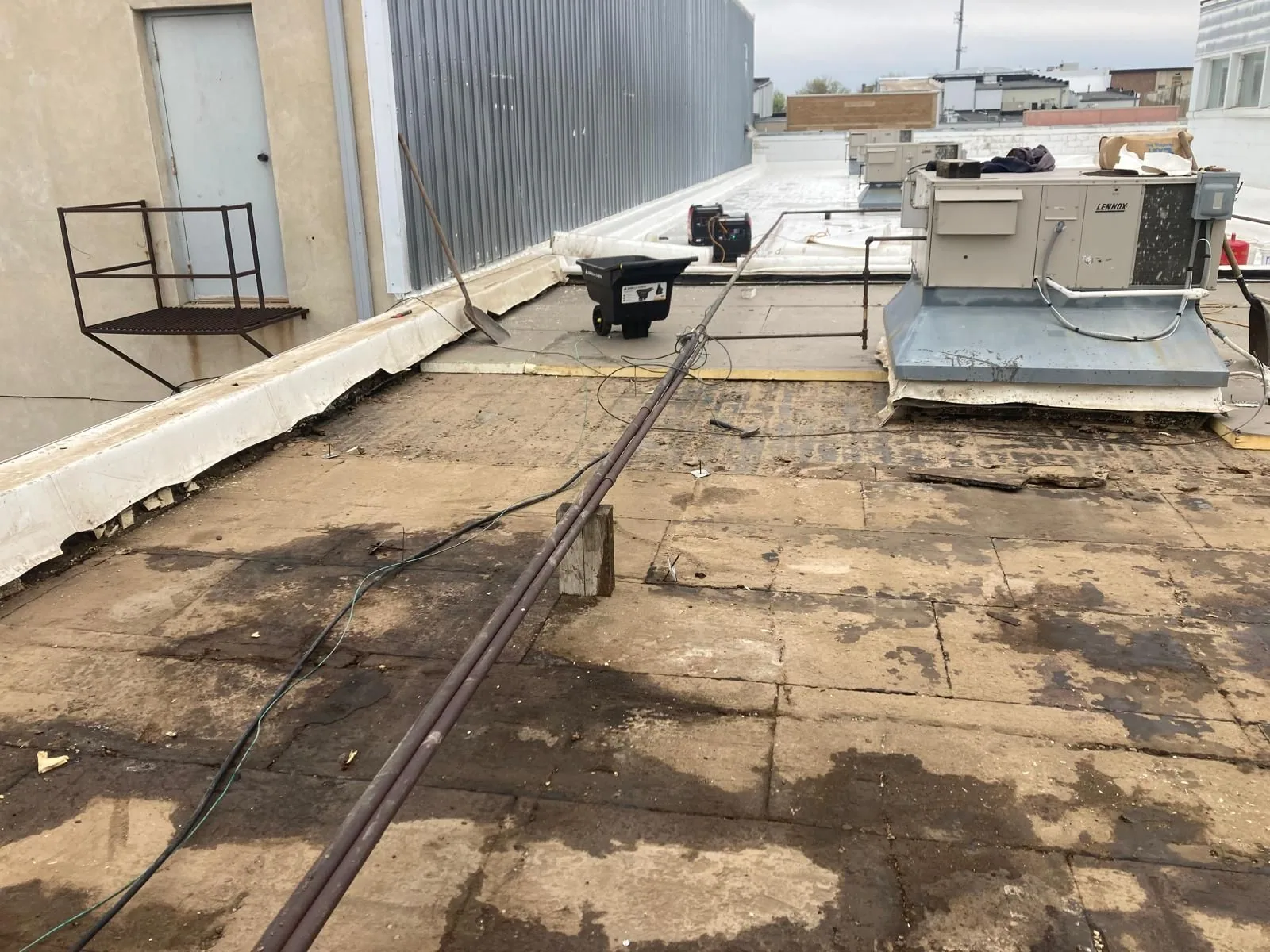
A core cut is a small plug taken through the roof. It shows each layer from sheet to deck. We see the membrane type, the attachment, the insulation and its condition. We see whether water has reached the board.
We cut where the evidence points. Ponding lines, soft spots, blisters and old repairs are good places. We patch each cut the same day and mark it on the plan. One core tells us about one spot. Several cores, placed along a pattern, tell us about the roof. Then we can draw a boundary around wet areas and price a repair that fits the problem. Without the boundary, owners tend to hear two bad choices: patch everything or replace everything. With it, there is a third choice, a section repair, and the sheet shows how many square feet it covers. That is often the answer on a roof where only one corner took on water.
What ponding lines mean
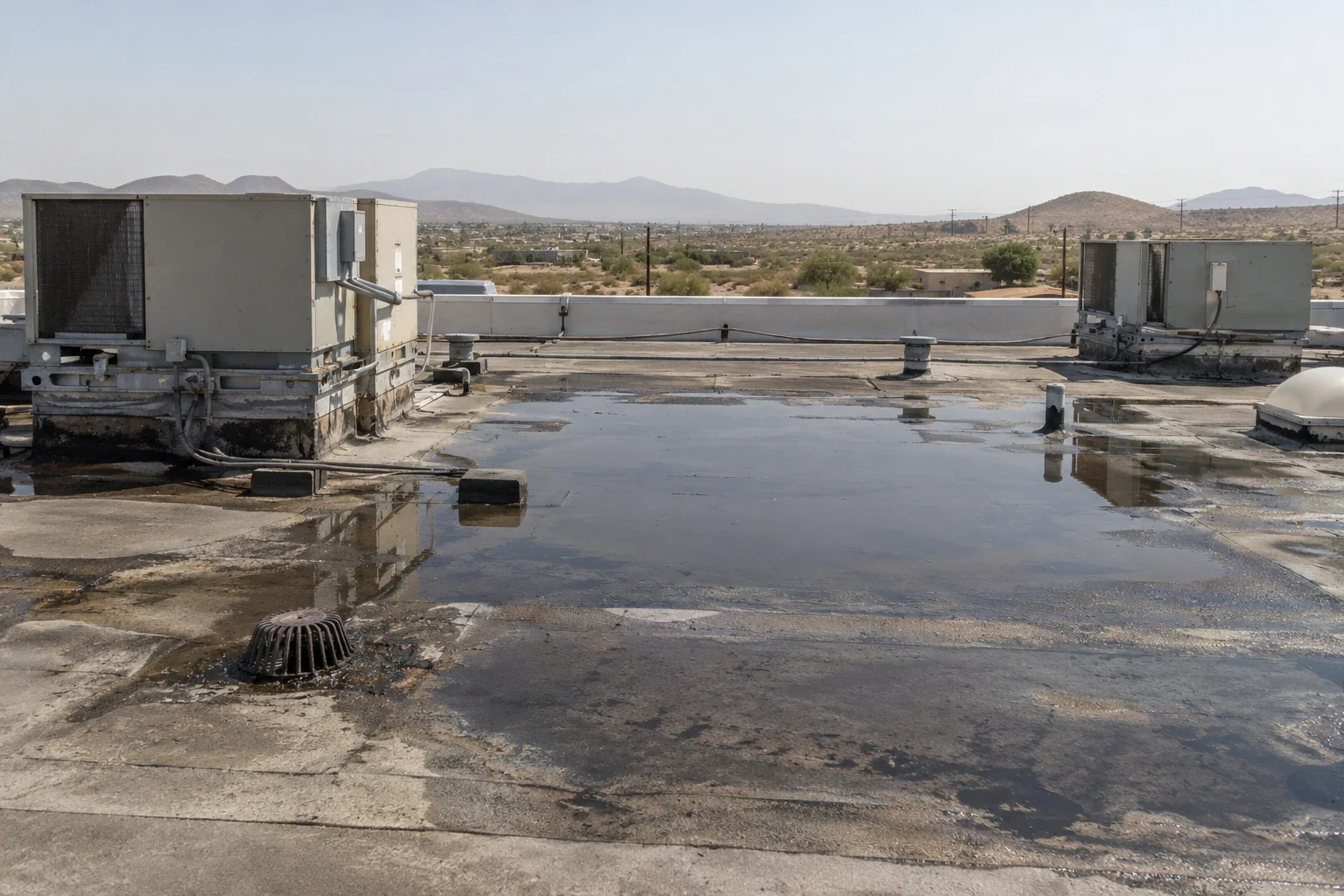
Water that cannot leave the roof sits at low spots. When it dries, it leaves a ring of dirt. We call that a ponding line. It marks where the deck has sagged or where a drain sits too high.
Ponding does damage in three ways. It adds weight. It speeds the aging of the sheet. It finds any small flaw in a seam. We measure how deep the water gets and how long it stays. Then we check the drain screens and the scuppers. Often the fix is simple: clear the drain, add a drain or taper the insulation. The ponding water repair choice depends on what the core cut shows. A drain set too high needs to be lowered. A deck that sagged may need tapered insulation to move water to the drain. A drain that never worked needs to be added. Each fix has its own cost, and the findings sheet puts them in a row so you can see the spread.
What freeze and thermal swing do
Prescott Valley sits near 5,100 feet, with about 15 inches of precipitation a year. Freezing mornings run from about October 21 through May 1 in the Prescott area. Daily swings there average almost 30 degrees.
Wet board freezes and expands. Dry board does not. That is why moisture matters so much before winter. Fasteners and adhesives carry the daily movement of the whole assembly, and wet insulation makes that movement worse. We probe seams, check fastener rows and photograph what we find before the first hard freeze. Fixing a wet corner in October costs less than a failed section in February. Hail adds one more thing to look at. Pea-sized hail, like the stones in the July 20, 2026 storm, rarely hurts a sound roof. Bigger stones can crush soft board under the sheet. A press test on the roof tells us whether the board under a mark has given way, and a core confirms it.
Large buildings on the east side
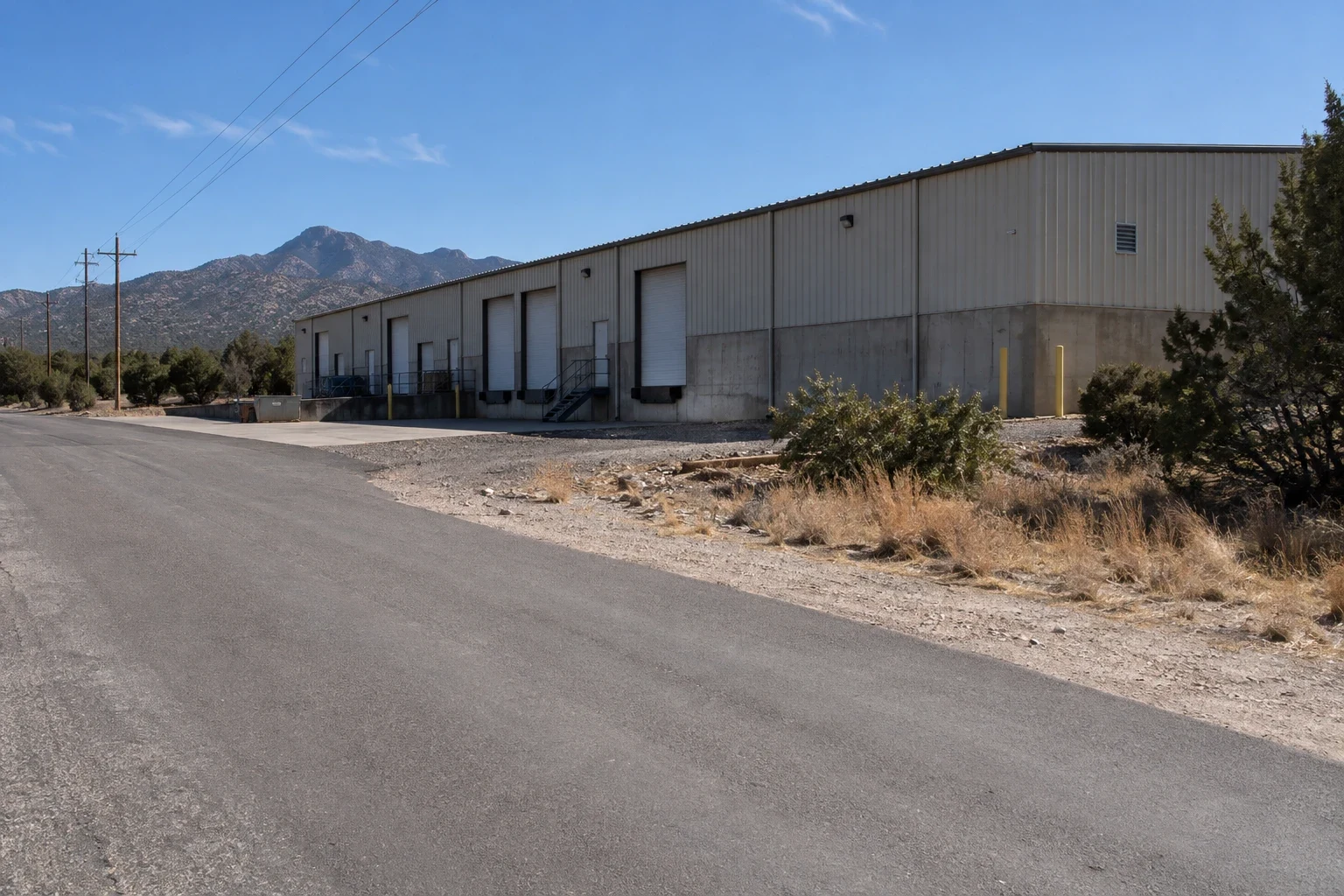
Manufacturers and distributors cluster on the east side of Prescott Valley. MI Windows and Doors employs 440 people and the Ace Hardware Retail Support Distribution Center employs 418. Plants and warehouses of that scale share a few concerns: long seams, many drains and heavy rooftop equipment.
Along the Fain Road corridor, we start each walk with the drains and the equipment curbs. Then we sweep the field. A plant or warehouse cannot close for a roof, so we plan the work in sections and agree on access with the facility director. The plan names where trucks stage, which dock doors stay clear and what hours the crew can run a loud tool. Plants and distribution buildings have their own rhythms, and a roof job has to fit them. We write that into the scope so no one finds out on the day.
What goes in the file
The file holds the assembly description, core results, dated photos, repair history and any warranty papers. It names the next review date. For owners with several sites, the files feed a roof condition report that ranks buildings by remaining service.
If the portfolio mixes makers, the same fields apply to a GAF roof or a Holcim Elevate roof. A board can read one page for each building and know what comes next. For a building in Big Sky Business Park or one on the east side, the first page shows the last walk, the next walk and the open items in order of urgency.
Commercial Roofing Questions
Can wet insulation be dried in place?
Rarely. Once the board is saturated, it holds water and drying under a sealed sheet is slow. We map the wet area with a moisture scan and cores, then price removal and replacement of that section.
Why add a cover board over insulation?
It spreads load and resists puncture. On roofs with equipment service traffic, a cover board can protect the membrane for years. The added cost buys a longer service line for the sheet.
How many cores does a roof need?
Enough to see a pattern. A small roof may need two or three. A large field may need more. We place them where ponding, blisters or soft spots point, and we log each one.
Does thicker insulation lower heating cost?
It helps, but the benefit depends on the building. We record the thickness and type in the file. We leave the energy math to the facility's own records.
What do I send to start?
Send the address, any known roof details, past reports and warranty papers. We book the walk and return a photo-backed sheet before pricing.
Request a walk-through
Ask for a roof walk. We will cut cores where the evidence points and deliver a written findings sheet with photos before any repair is priced.
Request a Roof Assessment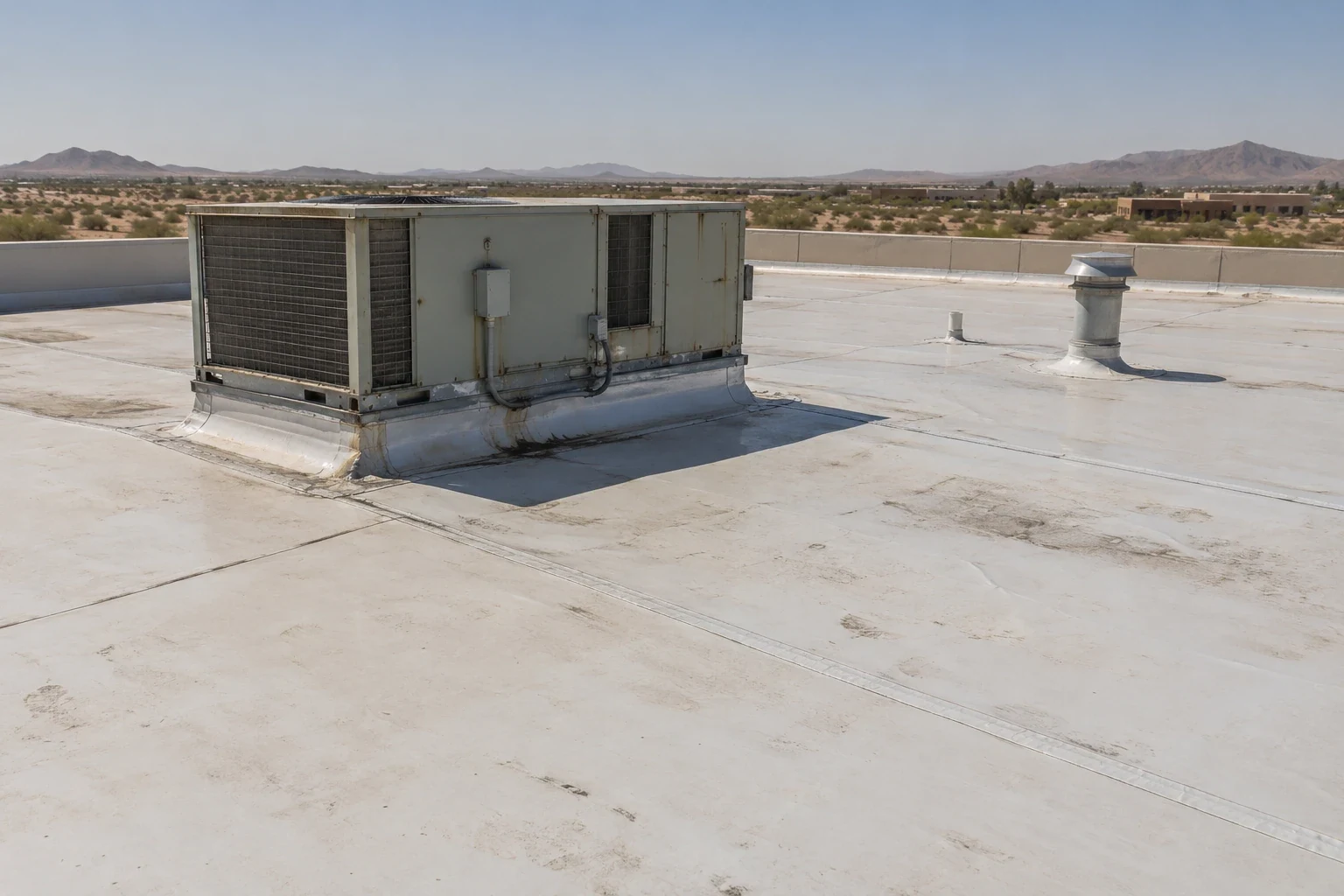
Commercial Roofing Questions
Rarely. Once the board is saturated, it holds water and drying under a sealed sheet is slow. We map the wet area with a moisture scan and cores, then price removal and replacement of that section.
It spreads load and resists puncture. On roofs with equipment service traffic, a cover board can protect the membrane for years. The added cost buys a longer service line for the sheet.
Enough to see a pattern. A small roof may need two or three. A large field may need more. We place them where ponding, blisters or soft spots point, and we log each one.
It helps, but the benefit depends on the building. We record the thickness and type in the file. We leave the energy math to the facility's own records.
Send the address, any known roof details, past reports and warranty papers. We book the walk and return a photo-backed sheet before pricing.