Aircraft Hangar and Aviation Building Roofing in Prescott Valley, AZ
Roof inspection, repair and retrofit for hangars and aviation buildings near Prescott Valley, AZ, with findings that protect aircraft, tools and records.
Look at the hangar floor after a monsoon cell. A dark patch on the concrete, far from any door, tells you the roof has opened somewhere above. In a hangar that patch can sit under a wing. It can sit under an open panel or a tool cart. We walk the roof in Prescott Valley, AZ, and trace the path back from that patch. We photograph each finding and send a written sheet before anyone prices a repair.
Hangars are big boxes with few walls. The roof does most of the work. When it fails, there is little else between the weather and the aircraft.
What we find
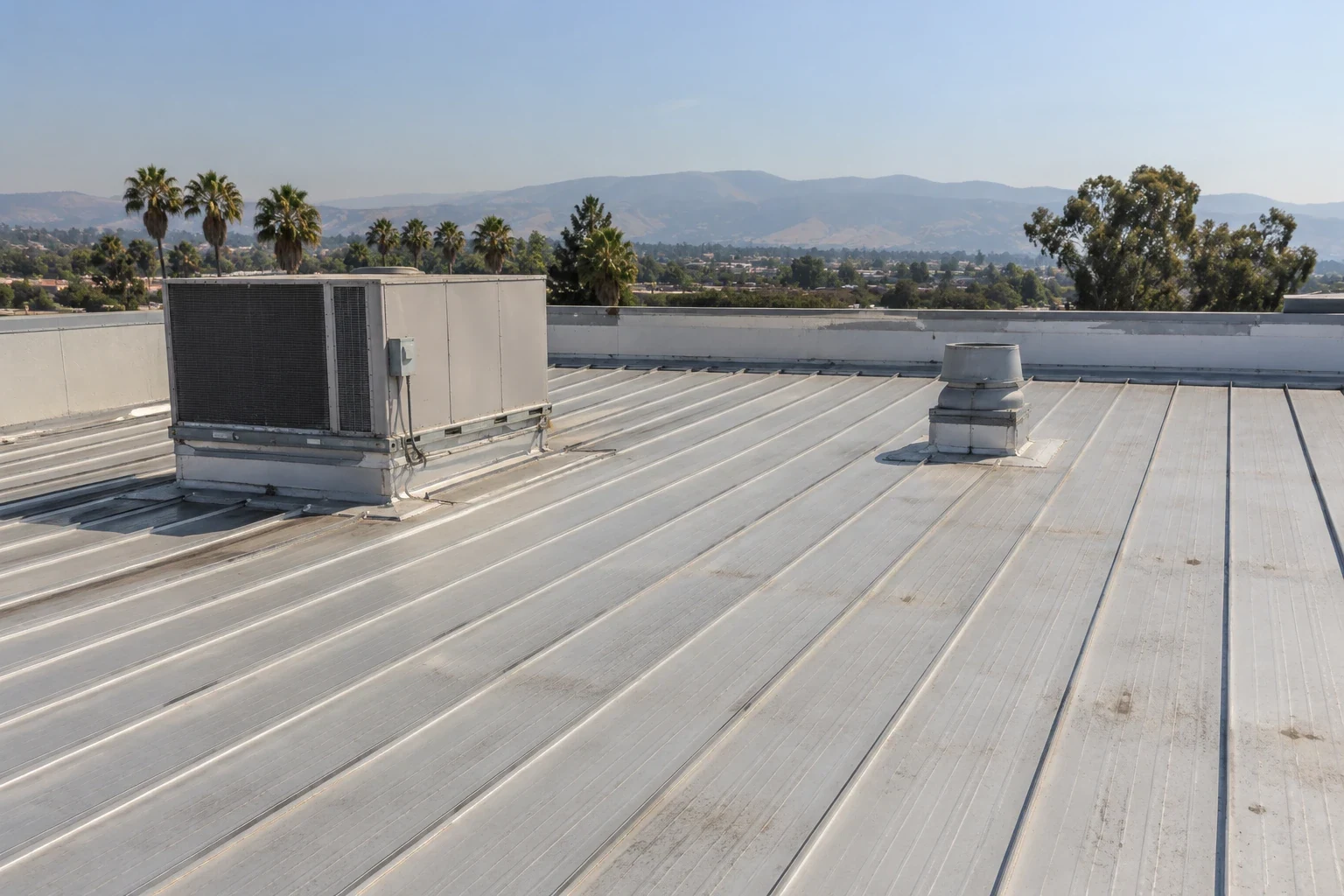
Hangar roofs are often metal, frequently long-span, with wide panels and few supports. Some are low-slope membrane over a steel deck, and an older hangar may carry a built-up roof.
On metal hangars, we find backed-out fasteners, worn washers, open laps and failed sealant at the ridge and eave. We find panel movement at the ends of long runs. The panels grow and shrink with the day. Over years, that motion loosens the screws and opens the seams.
On membrane hangars, we find open seams, flashing that has pulled from a wall and drains packed with gravel and leaves. A large flat roof sheds a lot of water at once. If the drains are blocked, the roof becomes a pond.
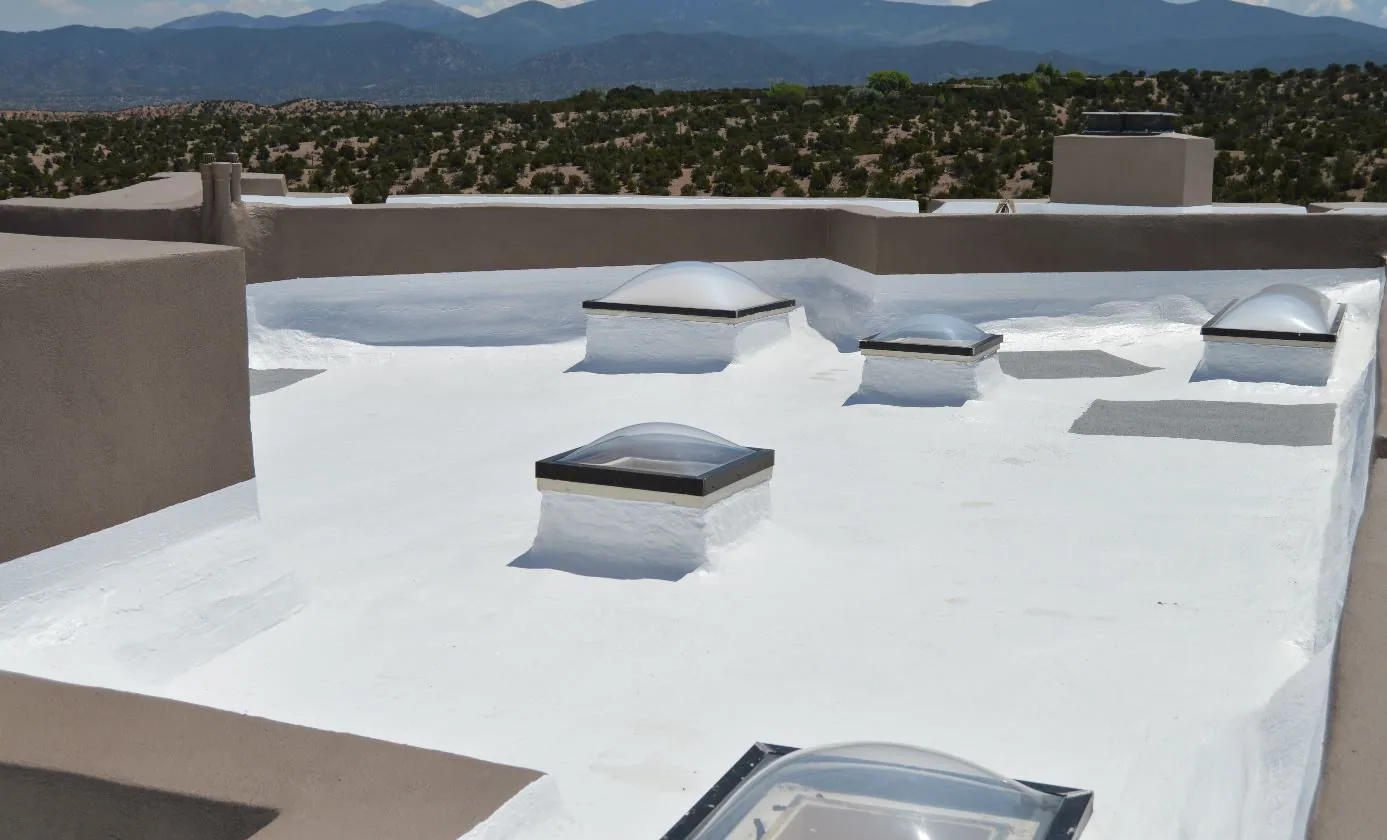
Skylights and daylight panels are the third item. Some hangars have them. Each one is a curb with a seal. Each seal ages.
Drainage on a hangar needs its own look. A long roof with an eave gutter can overflow in a monsoon cell and run down the door track. A concrete apron that slopes toward the building turns the overflow into a flood. We check the gutters, the downspouts and the apron slope, and we flag any spot where roof water ends up inside the door line. Edge metal and gutter work is often the cheapest fix.
What monsoon and freeze do
Prescott Valley sits near 5,100 feet, and the area gets about 15 inches of precipitation a year. Most comes in July and August. Monsoon cells bring rain, strong gusts and hail in minutes. On July 20, 2026, a cell with pea-sized hail knocked down signals and trees in town.
Wind is the big word for hangars. A hangar has a large roof area and a wide door. When wind gets inside, it lifts the roof from below. The edges and the door header take the load. We check every fastener and cap along the perimeter and above the door.
Winter adds the freeze. Freezing mornings run from about October 21 through May 1. Daily swings reach nearly thirty degrees. Metal panels move, sealants crack and laps open a hair. We probe each lap in the fall.
Aviation buildings in this area
Prescott Regional Airport covers about 760 acres with three runways and United Express service to Denver and Los Angeles. Embry-Riddle's Prescott campus opened in 1978 on 539 acres with about 2,000 students and aerospace labs. The Prescott Valley Economic Development Foundation targets aerospace companies among its recruiting goals. Together these facts describe an area where aviation buildings are part of the economy.
That means hangars, maintenance shops, lab buildings, offices and storage. Each has its own roof. A maintenance shop has equipment on the roof. A lab building has sensitive instruments below. A small private hangar may have a simple pitched roof.
We treat each by use and ask what sits under each roof, then write the plan to fit. Where a building falls within Prescott, the plan covers the access and escort needs that come with an airport site. Education buildings follow many of the same rules as college and university roofs.
What to repair now, and what can wait
Repair now: any open lap or fastener above aircraft or equipment, a damaged skylight curb, a cracked cap near the door, a drain packed solid before monsoon. These let water in or will in the next cell.
Repair soon: worn washers on rows that still seal, dry sealant beads, rust staining at fasteners. A day of fastener work on a section costs far less than a panel replacement.
Can wait: cosmetic fade, small dents, surface rust on sound panels. We list them and look again next visit.
If the panels are sound, a coating can extend life. A roof coating restoration seals laps and fasteners in one pass. If the metal is thin or rusted through, a metal roof retrofit goes over the old roof without tearing it off. That matters in a hangar, where an open roof means open sky above the aircraft.
Think about what is stored overhead, too. Many hangars have a crane rail, a lighting grid or a fire suppression line hung from the roof structure. Any repair that adds weight or cuts a framing member needs a check. We note those items on the plan and ask an engineer to review before we change anything attached to the structure.
What to ask for in writing
Ask for a findings sheet with photos and a roof plan. Ask for a price on each item. Ask for a work sequence that tells you which bays are open and when. Ask how the crew protects aircraft, tools and floor.
Ask about fall protection and fire safety. Hangars often have rules on hot work and open flame. A heat-welded repair near fuel or a fueled aircraft is a hazard. The plan should say which methods are allowed and where.
Ask about access. An airport site may need badges and escorts. The plan should list who clears the crew, when and where. Military hangars add base access and escort rules of their own, the same ones a military installation roofing job runs on. New steel buildings in business parks, such as Big Sky Business Park, sit closer to flex industrial roofs than to hangars.
Commercial Roofing Questions
Can a hangar roof be repaired while aircraft are inside?
Often, yes, if the work is overhead and the area below is covered. We plan the sequence with the hangar manager, protect aircraft and tools with catch covers, and avoid hot work near fuel. Some jobs need aircraft moved out first.
What is the main cause of hangar leaks?
Fasteners and laps on metal roofs, and seams and flashings on membrane roofs. Thermal movement and wind wear on both. The first sign is often a dark patch on the floor. We trace it back to the source by walking the roof above.
Does wind lift hangar roofs from below?
It can. When a large door is open or a gust enters the building, the roof can feel pressure from inside. Edge and ridge fasteners take that load. We check them and add fasteners or caps where they are loose.
Do skylights and daylight panels cause problems?
They can. Each is a curb with a seal, and seals age. Panels can also crack in hail. We check every one, reseal or replace the ones that are worn, and note the rest for next visit.
How do we plan work around flight operations?
Tell us the hours that matter. We schedule noisy work and lifts for quiet windows, keep cranes clear of flight paths and coordinate access with airport staff. Every site has its own rules, and the plan follows them.
Request a walk-through
Ask for a walk-through of your hangar or aviation building roof. We will send a written findings sheet with photos before we price any repair, and we will plan the work around your aircraft and operations.
Request a Roof Assessment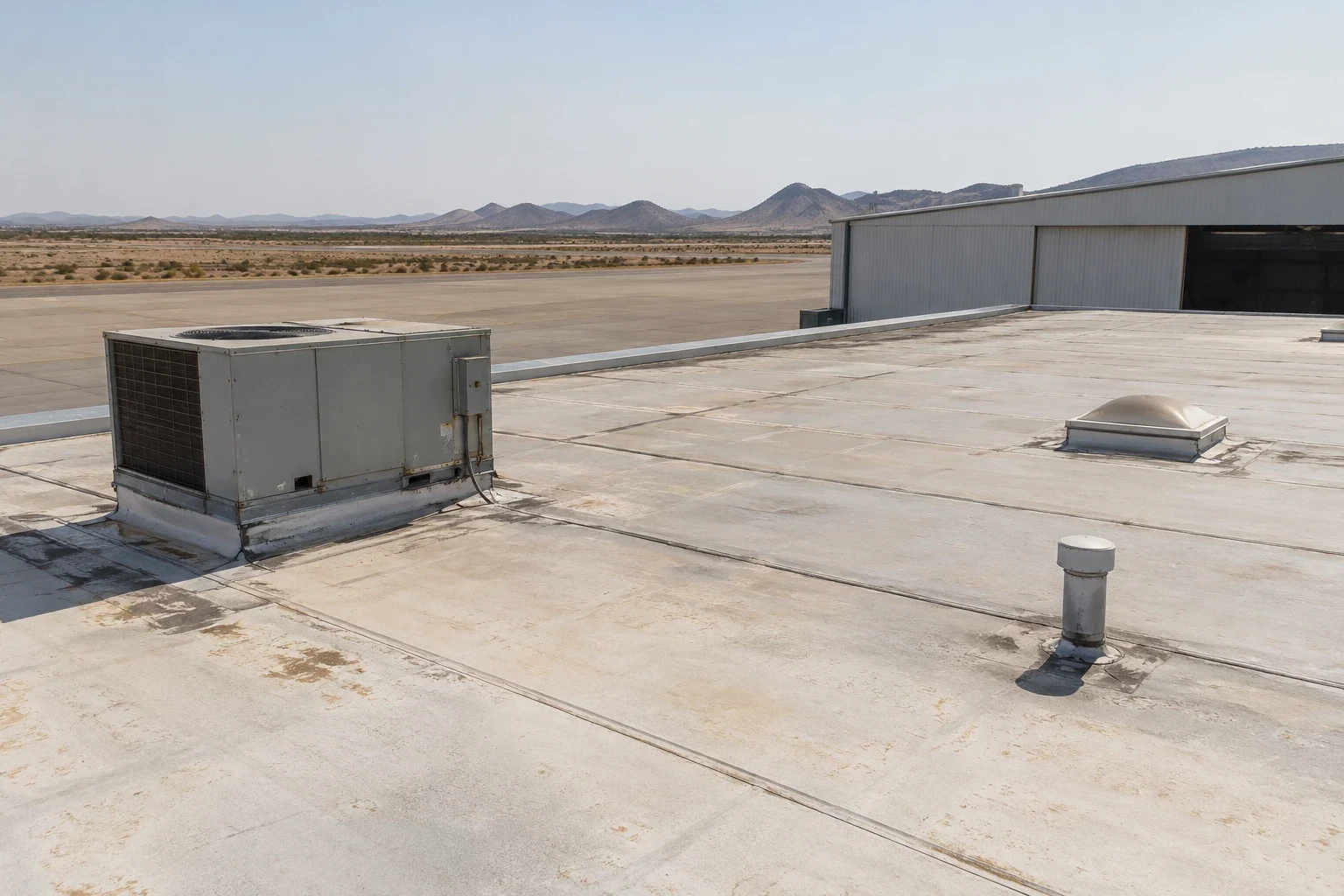
Commercial Roofing Questions
Often, yes, if the work is overhead and the area below is covered. We plan the sequence with the hangar manager, protect aircraft and tools with catch covers, and avoid hot work near fuel. Some jobs need aircraft moved out first.
Fasteners and laps on metal roofs, and seams and flashings on membrane roofs. Thermal movement and wind wear on both. The first sign is often a dark patch on the floor. We trace it back to the source by walking the roof above.
It can. When a large door is open or a gust enters the building, the roof can feel pressure from inside. Edge and ridge fasteners take that load. We check them and add fasteners or caps where they are loose.
They can. Each is a curb with a seal, and seals age. Panels can also crack in hail. We check every one, reseal or replace the ones that are worn, and note the rest for next visit.
Tell us the hours that matter. We schedule noisy work and lifts for quiet windows, keep cranes clear of flight paths and coordinate access with airport staff. Every site has its own rules, and the plan follows them.