VA Medical Center and Clinic Roofing near Prescott Valley, AZ
Roof inspection, repair and replacement planning for VA medical centers and clinics near Prescott Valley, AZ, with historic building and patient area care.
Study the hipped roof on a hospital built in 1939. It has a long ridge, steep slopes and towers that break the line. Each valley, each tower base and each dormer is a place where two roof planes meet. Those joints are the first thing we check. The VA campus at Fort Whipple, about ten miles west of Prescott Valley, AZ, shows why. A building that old has details that no modern building has.
The written findings sheet, with photos, comes before any repair is priced. On a federal medical campus, that sheet is the start of a long chain of review.
The Fort Whipple campus
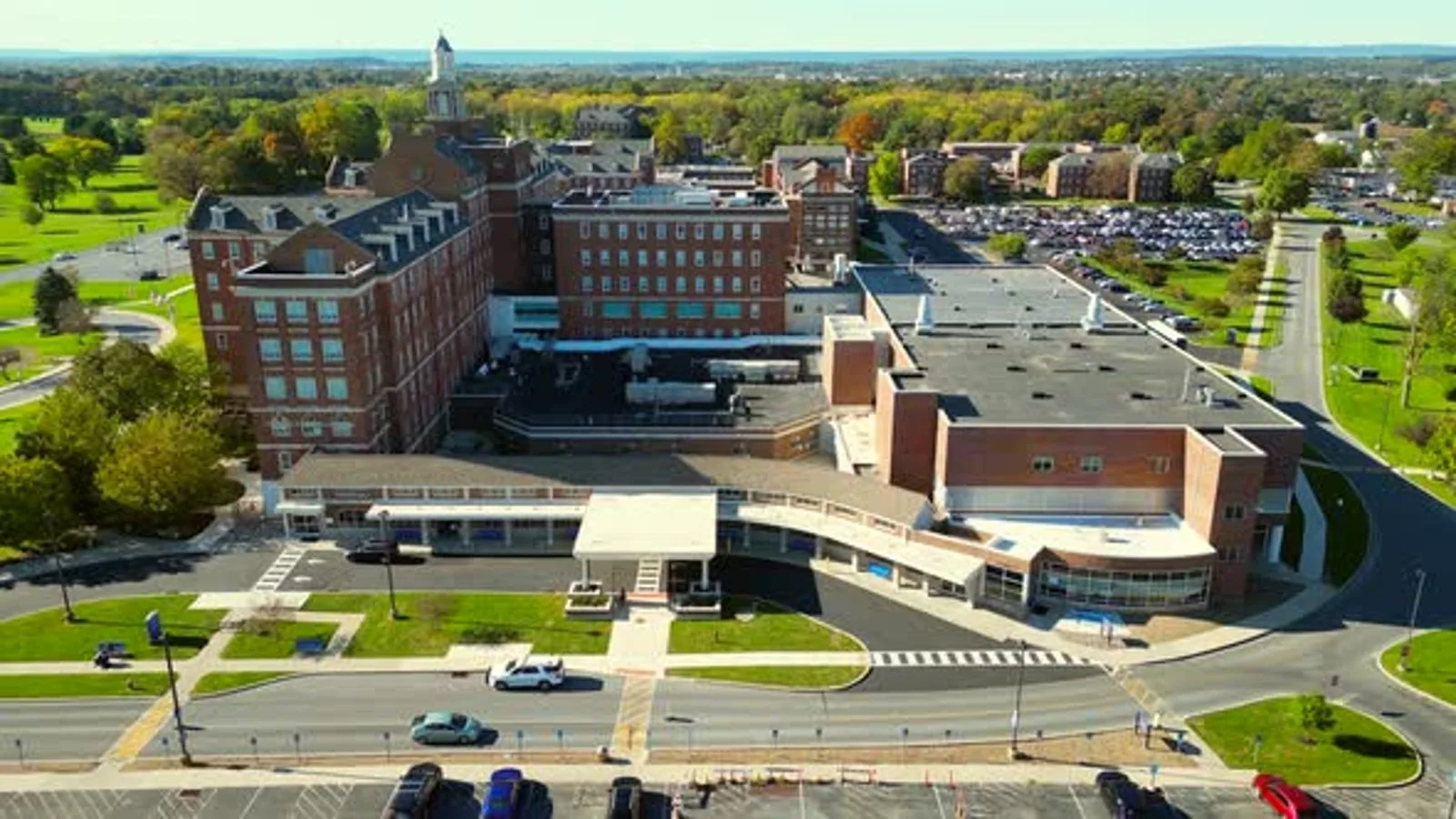
The Northern Arizona VA Health Care System has a campus in Prescott at Fort Whipple. It sits in the Fort Whipple VA Medical Center Historic District. The system employs about 1,300 people in Prescott, so it is one of the larger employers in the area. Contractors finished 23 Fort Whipple buildings by 1908, with concrete-block officers' quarters on granite foundations. Building 107, completed in 1939, stands four stories tall in a V shape, with a hipped roof, towers and room for up to 200 patients.
These facts point to a mix. Old quarters and a large historic hospital. Each has its own roof, its own age and its own rules. Each roof is opened up and looked at, not assumed.
Campuses like this one sit in the Prescott area, where weather and altitude add their own wear.
Crews drive in from Prescott Valley, about ten miles from the campus, so delivery routes and escort points are planned around that drive. State Route 69, the six-lane road that links Prescott Valley to downtown Prescott, shares traffic with commuters, and delivery windows avoid the peak hours. Hauling a roll of membrane through a gate that opens at set hours takes planning, and it is one of the first items on the schedule.
What we find on older medical buildings
Old hospital roofs have layers. A roof may have been patched, coated, overlaid and re-flashed over many decades. Each layer adds weight and hides what lies below. We probe, we scan and, where allowed, we take a core. The core shows how many layers there are and whether the insulation is dry.
On a roof like that, look for failed flashing at towers, chimneys and dormers, clogged internal drains and gutters, cracked or missing tiles or slates where the roof has them, loose metal at ridges and hips, and equipment added without a proper curb.
Newer clinic buildings are different. They tend to have low-slope roofs with single-ply membranes, rooftop units and many penetrations. The details are curb seals, pipe boots and drain screens. The same walk and the same sheet apply.
Internal drains deserve their own line. Old hospitals often route water through interior leaders and cast piping. A blocked leader backs water up onto the roof and can send it down a wall. We flag every drain for a camera check by facility plumbing staff.
What monsoon and freeze do
Prescott sits at about 5,319 feet and gets rain, wind, hail and thunderstorms in monsoon season, from June 15 to September 15. Average seasonal snowfall is 10.2 inches. The freeze season opens around October 21 and closes near May 1. Daily swings of nearly thirty degrees work on every joint.
A steep hipped roof sheds snow in slides. The snow lands on lower roofs, on walks and on entries. We note where it falls. On a hospital campus, a snow slide onto an ambulance bay or a patient entry is a safety issue as well as a roof issue.
Freeze cycles are hard on old masonry and old flashing. Water enters a hairline gap, freezes and widens it. After a few seasons, the gap is a leak. A fall walk, before the first hard freeze, finds those gaps while they are still small.
How roof work on a federal site works
Federal medical campuses have their own rules. Roofing is done to the Unified Facilities Criteria for roofing, where those apply. Contractors need badging, background checks and escorts. Material deliveries are inspected. Work hours may be tight. Patient care areas have infection control rules that govern dust, noise and air intake.
We can describe how that process works in general. What we offer is a clear written plan that fits the rules your facility staff give us. The plan lists who escorts the crew, where material is staged, how debris leaves the site and how each opened section is closed.
The access side follows the pattern of military installation roofing. The patient-care side follows the logic of hospital roofing, with tighter control on dust, odor and noise.
What to repair now, and what can wait
Repair now: active leaks over patient areas, failed flashing at towers and valleys, clogged internal drains, loose ridge and hip metal. Anything that lets water into a care space.
Repair soon: worn sealant, small cracks in flashing, aged pipe boots. Each is cheap to fix in a dry week.
Can wait: surface weathering on a sound roof, light staining, cosmetic fade. We list them and look again next visit.
On a historic building, the repair method matters as much as the repair. The goal may be to match the original look, as well as to keep water out. That can limit the choice of material and the color of metal. We write the plan to fit the preservation rules your staff give us, and we avoid changes that cannot be undone. A roof condition report records everything for the campus file.
What to ask for in writing
A findings sheet should arrive with photos and a roof plan, prices by building and by item, and a statement of how the plan fits infection control, security and preservation rules. The crew roster and dates belong in it as well.
Ask about phasing. A campus cannot close. Work goes building by building, wing by wing. Each phase has its own dry-in plan. If a monsoon cell is forecast, the crew closes the open area first.
Smaller outpatient buildings follow the pattern of medical office roofing, and the budget and records habits of government building roofing carry over to a federal site.
Commercial Roofing Questions
Do you work to federal roofing standards?
We can plan and install to the Unified Facilities Criteria for roofing when a federal project calls for it. The facility's own rules govern access, badging and schedule. We write the plan to fit them.
How do you handle a leak over a patient area?
Report it to facility staff first. They protect the room. We then trace the leak from the roof, make a temporary dry-in the same day if access allows and record the cause. The permanent repair is scheduled with the care team.
Can historic roofs be repaired without changing their look?
Often, yes. We repair in kind where possible and match profiles and finishes. Some roofs need new flashing or underlayment out of sight. Preservation staff review the plan, and we do not start until they agree.
What does a core cut tell us on an old roof?
It shows the layers, the thickness and the moisture in the insulation. It also shows if the roof has been overlaid before. That tells us if another overlay is possible or if the roof must be torn off. We patch the cut the same day.
How do you control dust near patient areas?
We seal openings, protect rooftop air intakes, use catch systems and work in small sections. Facility staff tell us which intakes to shut and when. We follow their infection control rules and keep a staff contact on site.
Request a walk-through
Ask for a walk-through of your VA clinic or medical campus roof. We will send a written findings sheet with photos before we price any repair, and we will plan the work around your access, care and preservation rules.
Request a Roof Assessment
Commercial Roofing Questions
We can plan and install to the Unified Facilities Criteria for roofing when a federal project calls for it. The facility's own rules govern access, badging and schedule. We write the plan to fit them.
Report it to facility staff first. They protect the room. We then trace the leak from the roof, make a temporary dry-in the same day if access allows and record the cause. The permanent repair is scheduled with the care team.
Often, yes. We repair in kind where possible and match profiles and finishes. Some roofs need new flashing or underlayment out of sight. Preservation staff review the plan, and we do not start until they agree.
It shows the layers, the thickness and the moisture in the insulation. It also shows if the roof has been overlaid before. That tells us if another overlay is possible or if the roof must be torn off. We patch the cut the same day.
We seal openings, protect rooftop air intakes, use catch systems and work in small sections. Facility staff tell us which intakes to shut and when. We follow their infection control rules and keep a staff contact on site.