Hospital Roofing in Prescott Valley, AZ
Roof inspection, leak repair and phased replacement for hospitals and healthcare campuses in Prescott Valley, AZ, with photo findings first.
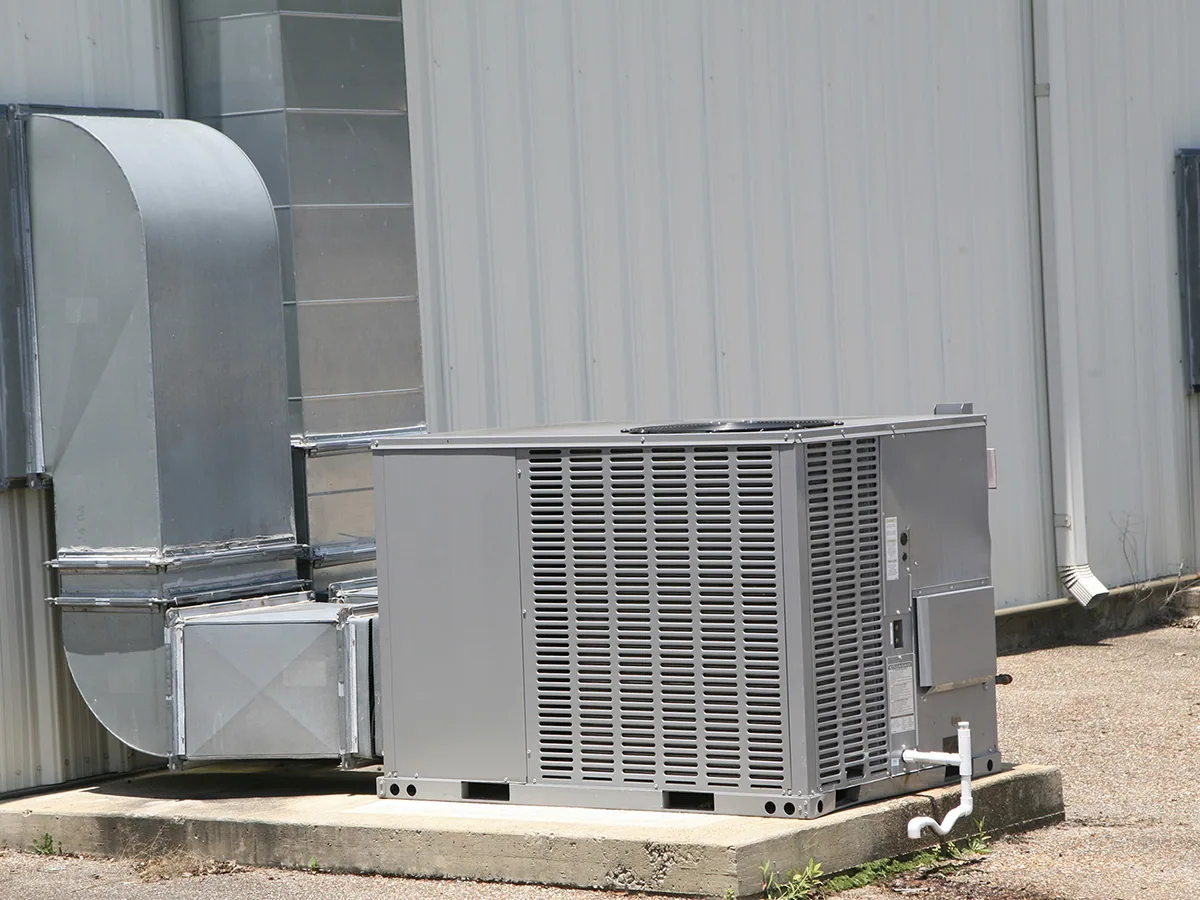
Start at the penthouse roof. On a hospital campus the heaviest equipment sits up there, and the sealant at the base of each unit takes heat, cold and vibration every day. In Prescott Valley, AZ, our walk checks every curb and seam, photographs each one and puts the result in a findings sheet before any repair has a price.
A hospital keeps operating through a roof job. The plan has to work around patients, air and noise.
Why a hospital roof is a different job
A hospital roof is not one roof. It is several roofs at different heights and ages. A new tower, an older wing and a service building each carry a different system.
Below them are surgical suites, patient rooms, labs and pharmacies. Each has rules about air, dust and water, and a leak above any of them can stop care.
So we survey roof by roof and grade each one by what sits below it. The findings sheet shows the grades with photographs, and it lets the facility team pick the first phase.
We count what is on each roof as well. Air handlers, exhaust fans, medical gas vents, generators and satellite dishes all add curbs and pipes. The count shows where a curb and support repair will pay off first.
Work above an operating room or a sterile processing area also needs a written release from the facility before the first cut, so the release dates go on the same schedule as the roof zones.
What the local campuses tell us
Yavapai Regional Medical Center East Campus is among Prescott Valley's largest employers. In Prescott, Yavapai Regional Medical Center employs 2,094 people and the Northern Arizona VA Health Care System 1,300. Healthcare is a major part of the local building stock.
Where a newer wing joins an older one, the roofs meet at a wall. That joint is a classic leak point, so we check the wall flashing, the cap and the drain at every change in roof height.
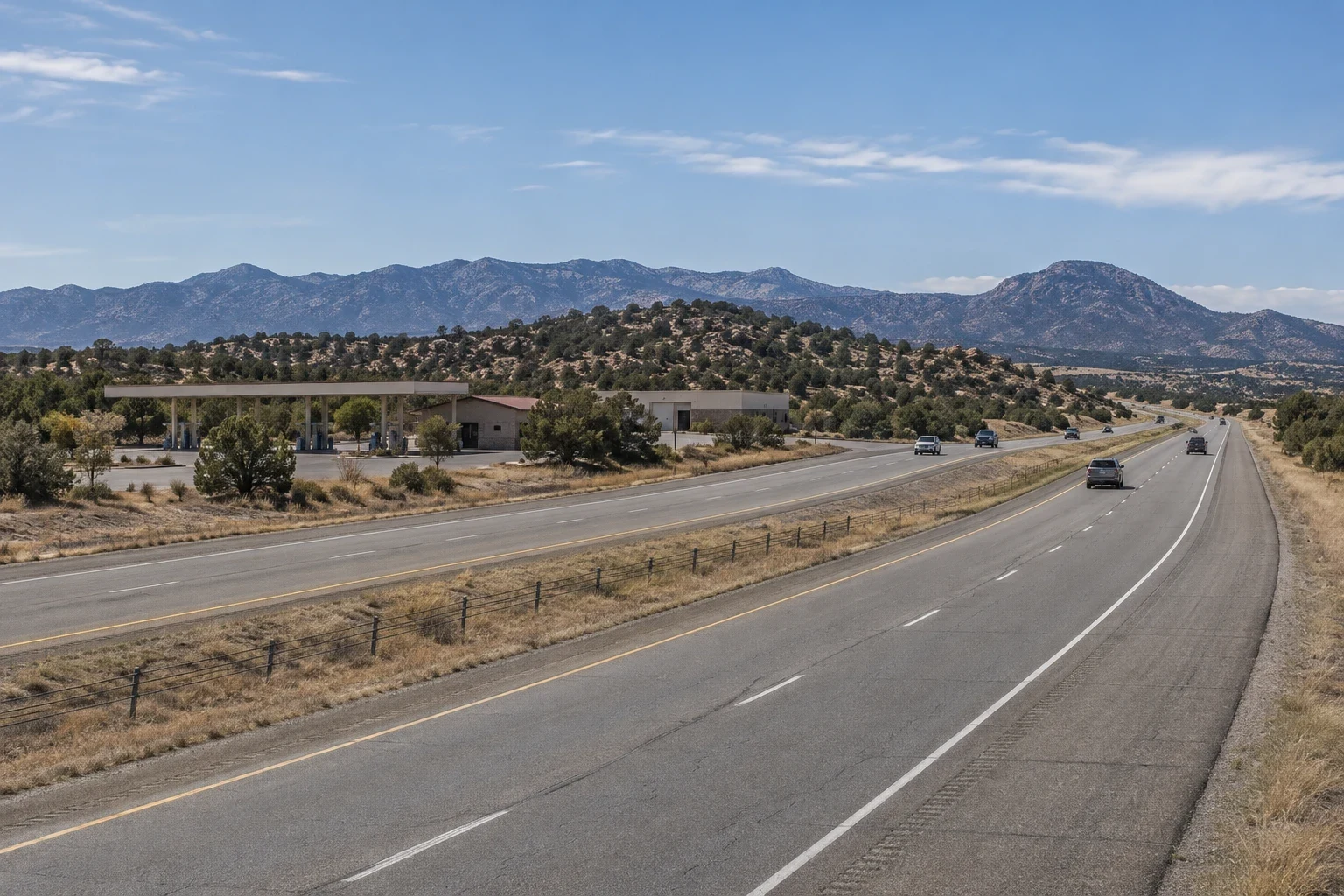
Contractors, deliveries and emergency traffic share the roads around any hospital, including the State Route 69 corridor that links Prescott Valley to downtown Prescott and Interstate 17. Crew arrival times avoid the peak hours, and crane picks follow the facility's own traffic rules. Nobody should learn about a lane closure from a delivery truck at the gate.
Hail, gusts and the grid
The July 20, 2026 monsoon cell reached Prescott Valley with strong wind and pea-sized hail, and power failed for more than 130 APS customers. A hospital has backup power, but its roof still takes the hit. Ridge-top wind off the 6,177-foot Glassford Hill reaches buildings near it, and an edge on a campus there gets a close look.
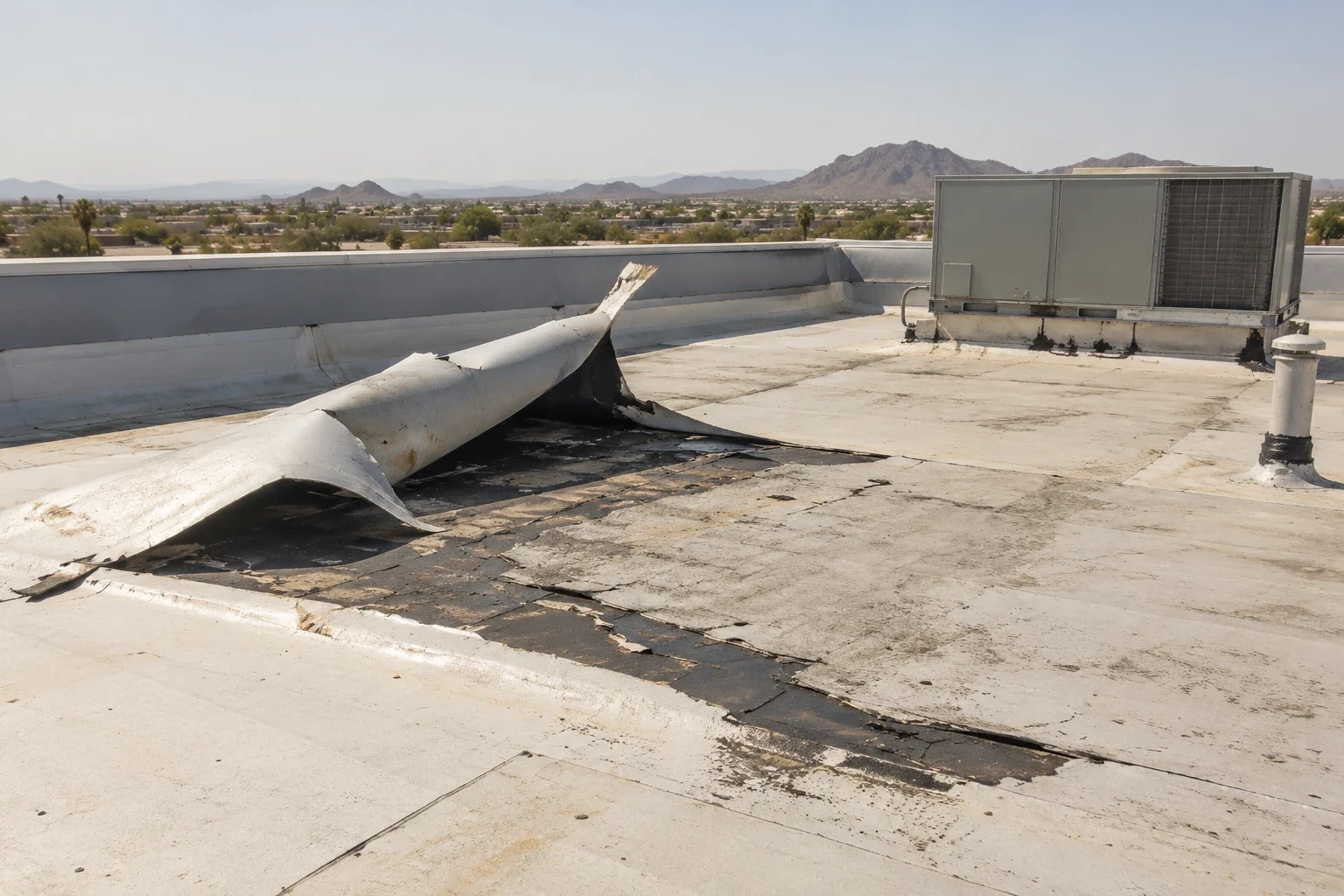
Gusts lift edge metal. Hail bruises membrane. A wind damage record helps with a claim, so after a major storm we walk the campus and photograph every change against the earlier set.
Hail is the quieter problem. Stones that small rarely puncture a roof, but they bruise thin membranes and dent vent caps. A bruise looks like a dark soft spot and leaks after the next freeze. We press the field, mark each spot and take a core if one looks deep.
Freeze, snow and thermal swing
From late October to the first of May, mornings start below freezing. The daily swing near 30 degrees stretches and shrinks every seam, and over a winter a tight seam opens a hair more each cycle.
Hospital roofs often have long runs of wall flashing and many mechanical curbs, and each one flexes. We probe the laps and press the sealant. Soft sealant has lost its bond, so we mark it and price the repair alone. Cold-weather repairs use temporary tie-ins, since adhesives and welds need dry, mild conditions. Larger work waits for late spring through early fall.
Prescott sees about 10 inches of snow in a season. At the low spots of a hospital roof we test drain flow, because melt that cannot leave refreezes overnight.
Protecting patients and air
Infection control comes first. Roofing makes dust, fumes and noise, and the facility team sets the rules we follow.
Staging moves away from air intakes and louvers get covered. Hot work stays clear of vents. Barriers and negative pressure go in where the facility requires them, and the crew follows the facility's permit and safety process. Each shift ends with a sweep.
Fire safety needs a plan too. Roofing can trigger alarms and sprinkler impairments, so fire watch, hot-work permits and shutoffs are agreed in advance. Loud work is scheduled around procedures and rounds. An occupied building reroofing plan sets the pattern, with tighter controls here.
What to repair now and what to phase
Repair now: leaks over procedure areas, failed curb flashing, open seams and blocked drains. Phase the rest, replacing by wing and starting with the roof that carries the most risk.
A phased plan spreads cost across years. Each phase has a scope, a price and a date. An infrared moisture survey maps wet insulation without opening the roof and guides the phases. A nearby medical office can follow the same schedule, and a senior living wing attached to a campus follows the same notice rules.
The package that reaches the facilities director holds the findings sheet, the core results, the plan and a plain statement of the effect on the warranty, along with who will be on the roof and when.
Commercial Roofing Questions
Can a hospital stay fully open during roof work?
Yes, with planning. The crew works in sections, closes each before the day ends and covers air intakes. It follows the facility's infection-control rules and permit process. Tell us which zones are most sensitive and they are protected first. Your facilities director approves each phase, and the plan goes to the safety and infection-control teams before the first shift.
How do you control dust and fumes?
Staging stays away from intakes, louvers are covered, hot work stays clear of vents and the crew sweeps at the end of each shift. Barriers and negative pressure go in where your plan requires them. Ask your infection-control team to review the plan before work starts. The crew lead checks in with the charge nurse or the facilities lead at the start and end of every shift.
Should we replace the roof in phases?
Usually. A phased plan spreads cost and limits disruption. Start with the roof that carries the most risk and the worst cores, and give every phase a scope, a price and a date. That written plan also answers budget and lender questions. If a storm damages a roof early, the plan shifts and the file shows why.
What happens when a leak starts at night?
Call at any hour. A crew locates the opening, covers it and photographs the damage, and a written summary follows the same day. The permanent repair joins the phased plan, and the facilities director learns which roof zone took the damage and how long the temporary fix should hold.
What does the roof file for a hospital include?
One folder should hold the dated photographs, the findings sheet, core results, repair invoices and warranty papers, along with a plan marking each curb and drain. We update it after every storm and repair. A surveyor, an insurer or a lender can read it in one sitting, and a newcomer on the facilities team can get oriented from it quickly.
Request a walk-through
Ask for a walk-through of your hospital roofs. We send a written findings sheet with photos before we price any repair. You decide what to fix now and what to phase.
Request a Roof Assessment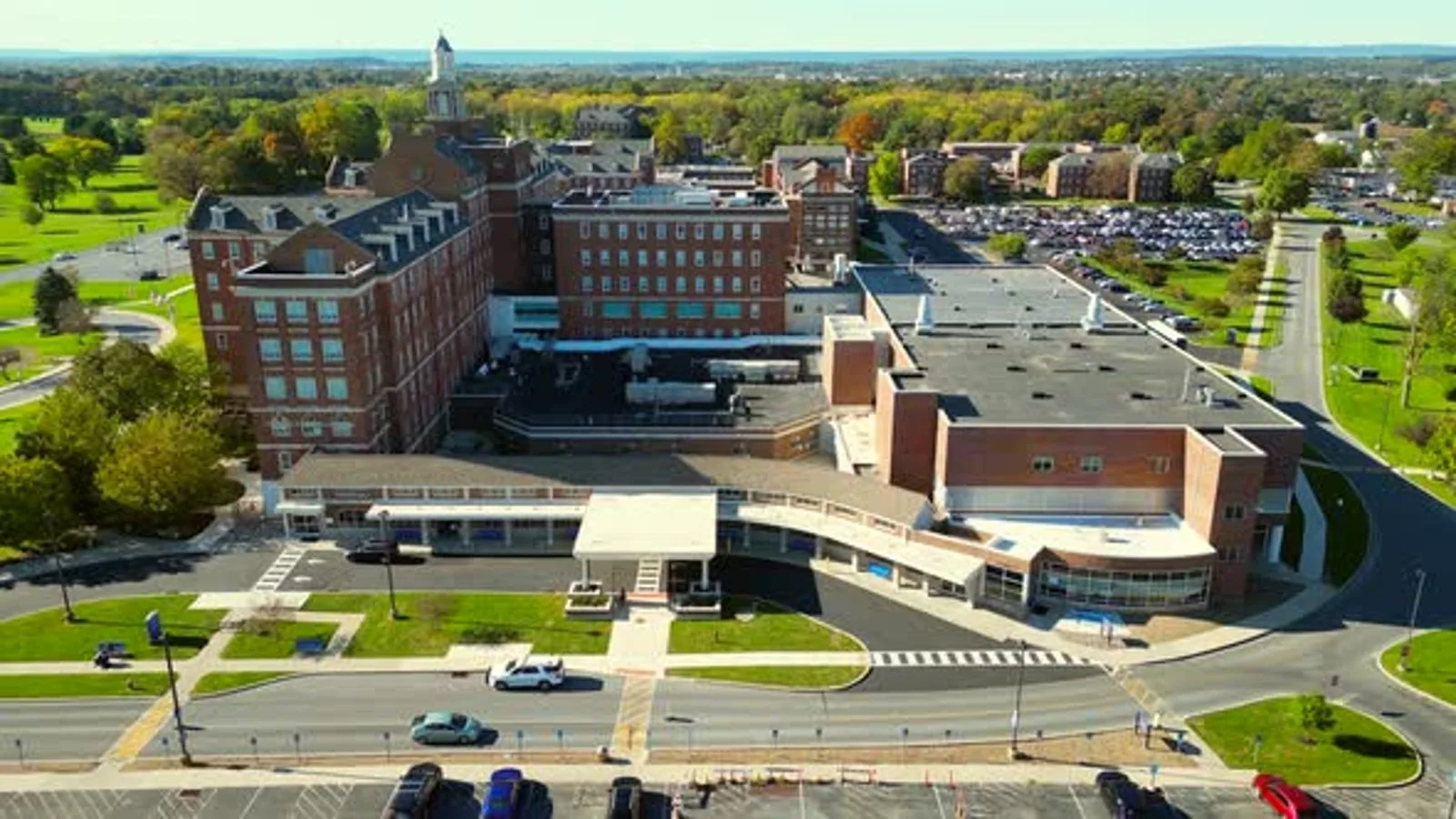
Commercial Roofing Questions
Yes, with planning. The crew works in sections, closes each before the day ends and covers air intakes. It follows the facility's infection-control rules and permit process. Tell us which zones are most sensitive and they are protected first. Your facilities director approves each phase, and the plan goes to the safety and infection-control teams before the first shift.
Staging stays away from intakes, louvers are covered, hot work stays clear of vents and the crew sweeps at the end of each shift. Barriers and negative pressure go in where your plan requires them. Ask your infection-control team to review the plan before work starts. The crew lead checks in with the charge nurse or the facilities lead at the start and end of every shift.
Usually. A phased plan spreads cost and limits disruption. Start with the roof that carries the most risk and the worst cores, and give every phase a scope, a price and a date. That written plan also answers budget and lender questions. If a storm damages a roof early, the plan shifts and the file shows why.
Call at any hour. A crew locates the opening, covers it and photographs the damage, and a written summary follows the same day. The permanent repair joins the phased plan, and the facilities director learns which roof zone took the damage and how long the temporary fix should hold.
One folder should hold the dated photographs, the findings sheet, core results, repair invoices and warranty papers, along with a plan marking each curb and drain. We update it after every storm and repair. A surveyor, an insurer or a lender can read it in one sitting, and a newcomer on the facilities team can get oriented from it quickly.