Commercial Roofing in Spring Valley, AZ
Wind-focused commercial roof inspection, edge securement, drone surveys and occupied-building reroofing for institutions and businesses in Spring Valley, AZ.
Start at the windward edge and look for bent metal. A bend along the lip of a roof means wind got a grip there. It will grip the same place again. Spring Valley, AZ is a small community of 1,143 residents at about 3,944 feet. Its best-known institution is Spring Ridge Academy, a boarding school founded in 1996. On September 26, 2019, straight-line winds of about 75 mph damaged around 20 mobile homes in Spring Valley and snapped a power pole.
Commercial roofs in the community get a walk, a seam probe and photographs of each finding, and the owner has a written findings sheet in hand before any repair is priced. Because wind is the proven local threat, the sheet starts with the edges, the corners and the fastening.
How straight-line wind works on a roof
Straight-line wind is not a tornado. It is a steady blast of air that pushes out ahead of a storm cell. In 2019 it reached about 75 mph. Air that hits a building has to go somewhere. It flows over the roof and speeds up at the edges and corners, where it pulls upward on the sheet.
That pull is called uplift. It is strongest at the corners, next strongest along the edges, and weakest in the middle. A roof that is fastened or adhered the same way all over can fail at a corner first. Once a corner peels, the wind gets under the sheet and works inward. We check these zones one by one, and we measure how firmly the sheet is held. The damage in 2019 hit mobile homes, not commercial roofs, but the wind that did it can lift edge metal and membranes just as well.
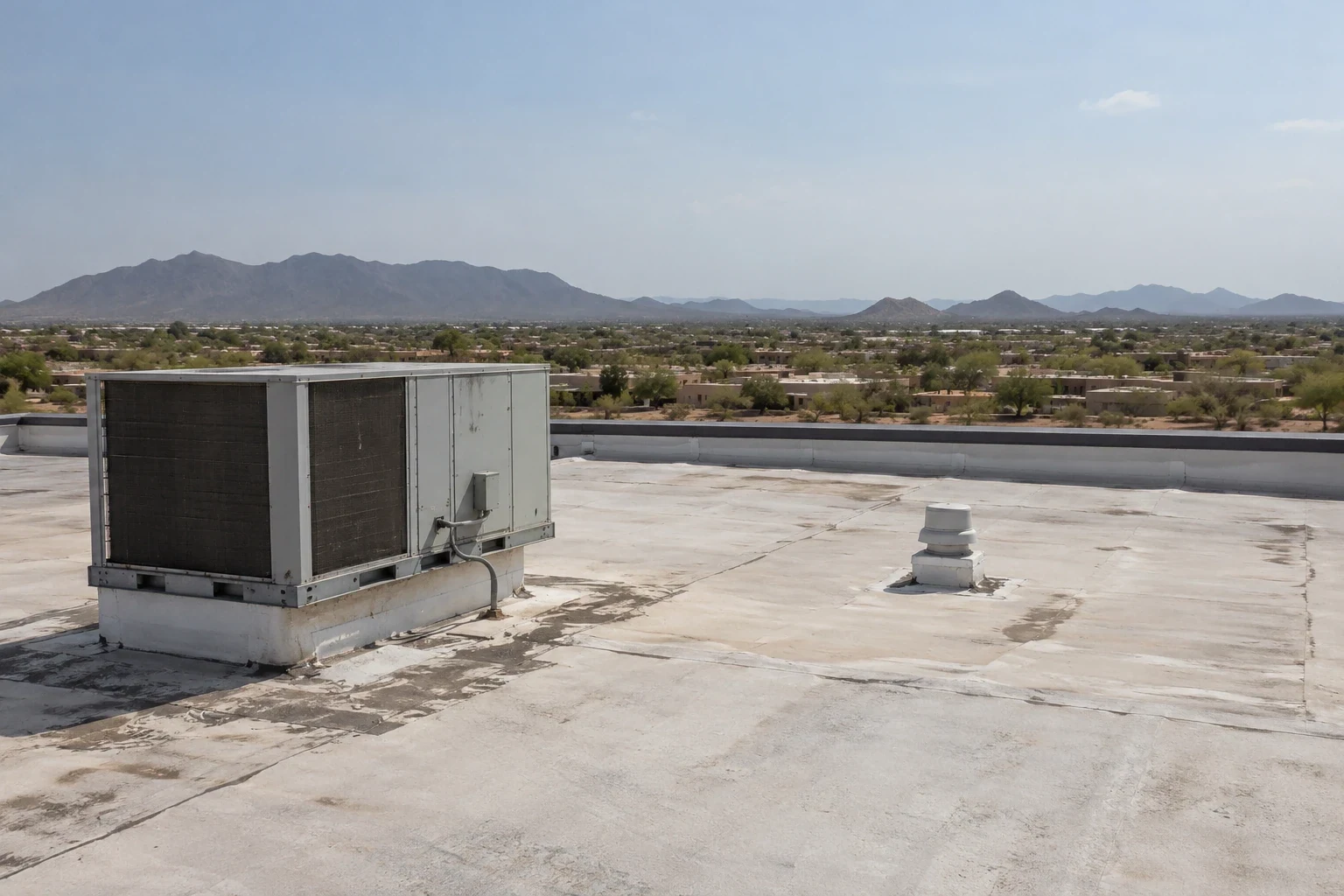
Rooftop equipment adds a second kind of exposure. A unit that is strapped down poorly can shift in a gust and tear the curb flashing around it. We check the straps, the curb and the sealant, and we photograph each unit from two angles. Any equipment that has moved gets a note on the sheet and a fix on the repair list.
Edges first, always
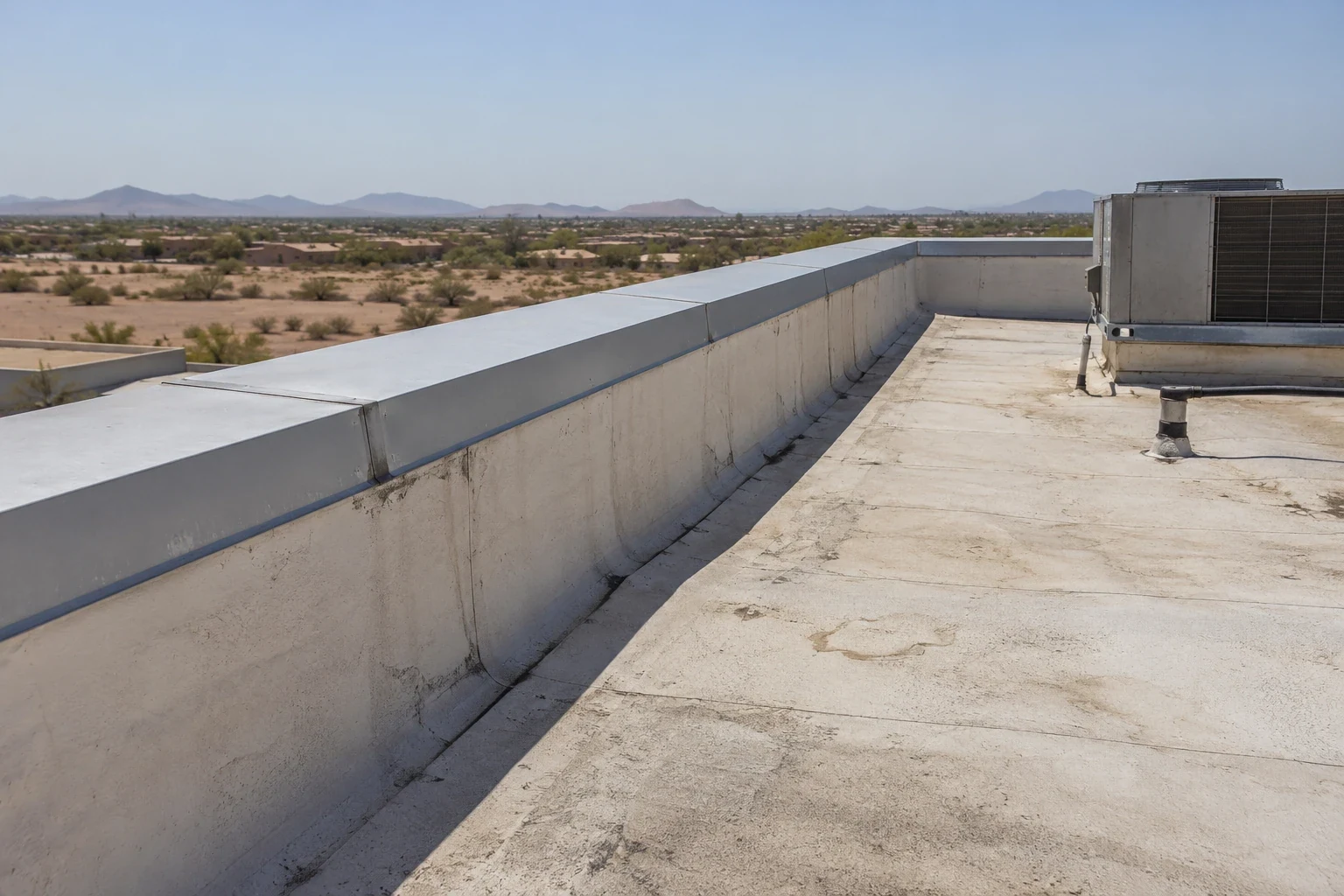
Edge metal is the cap that finishes the roof perimeter. It grips the membrane and shuts out the wind. If it comes loose, the membrane goes next. Our edge metal and coping checks cover three points. The fasteners that hold the metal down. The joints between lengths. The sealant under the lip.
We pull gently on each length by hand. A piece that moves is a piece that will fly. We mark it, photograph it and count the fasteners it needs. On a long perimeter, that count adds up, and it belongs on the sheet. The repair is usually a day of work. A peeled corner after a gust is a week of work and a wet ceiling.
Gutters and downspouts take wind loads too. A gutter pulled loose at one end hangs by its remaining brackets and drags the edge metal with it. We check bracket spacing, test the slope with water and clear the outlets. If a gutter has bent past saving, we price a new run alongside the repair. Both options appear on the sheet so the owner can pick.
Institutions and occupied buildings
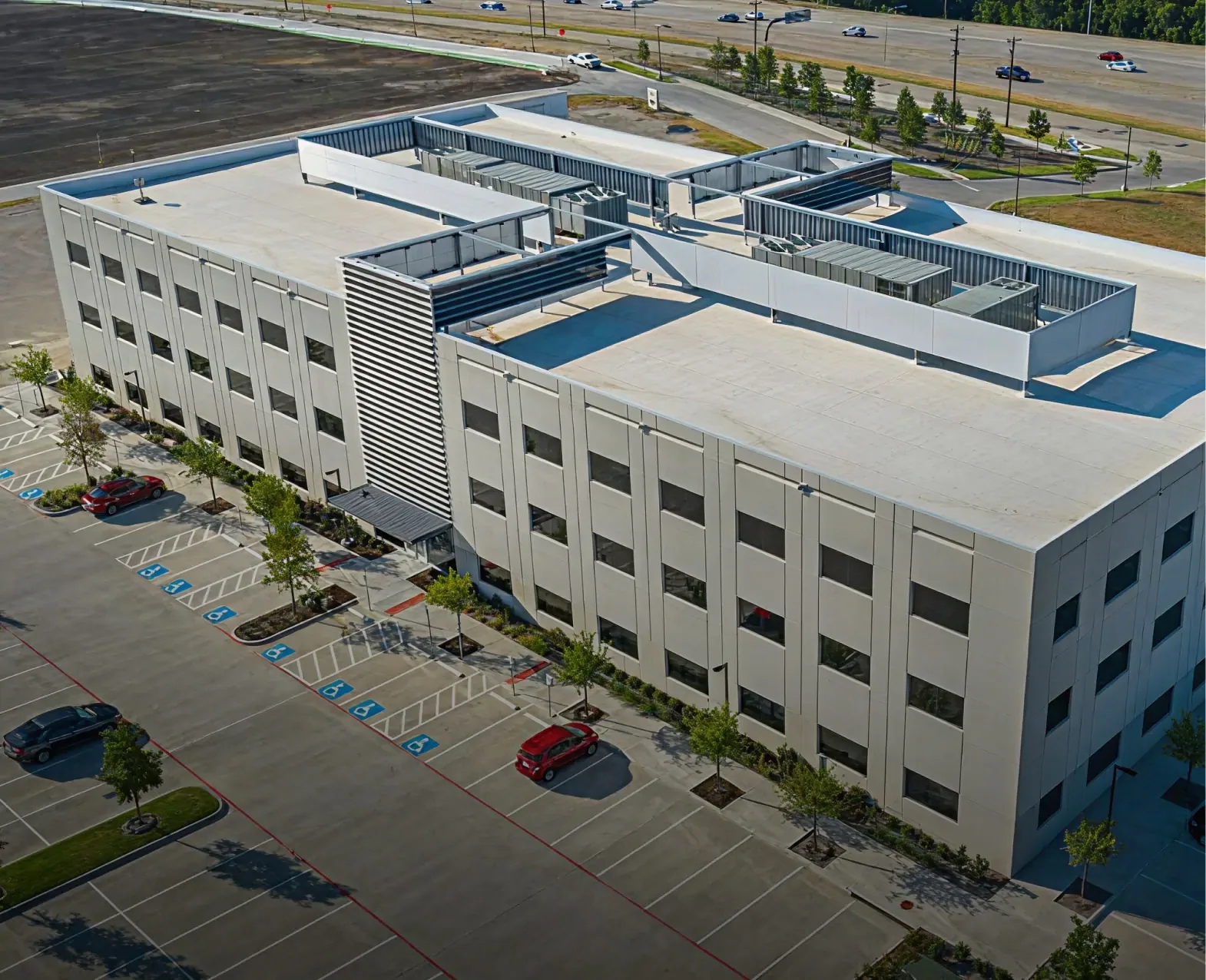
A boarding school never fully empties. Students sleep, study and eat on site. A roof over a dormitory or dining hall cannot sit open for days. Work on such a building must be sequenced in sections, with each section dried in by the end of the day. Our occupied building reroofing plan names where the crew will work, where material will stage and how noise will be kept away from classrooms and sleeping rooms.
Each building is walked and its roof is written down as found. A residential or campus owner can then see every roof on one list, ranked by urgency, with a budget for each year ahead.
Fire and life-safety rules apply on any site where people sleep. Hot work needs a permit and a watch. Torches and flame-heated tools may be off the table, and cold-applied or mechanically attached systems come forward as options. We ask early which rules apply, then write the scope to match.
Looking from above
A drone gives a clear view of a roof that is steep, tall or fragile. It also gives a record. A drone roof inspection takes overlapping photos that show the whole surface, and we compare them from visit to visit. A patch of ponded water, a dark stain or a displaced cap shows up as a change between two sets.
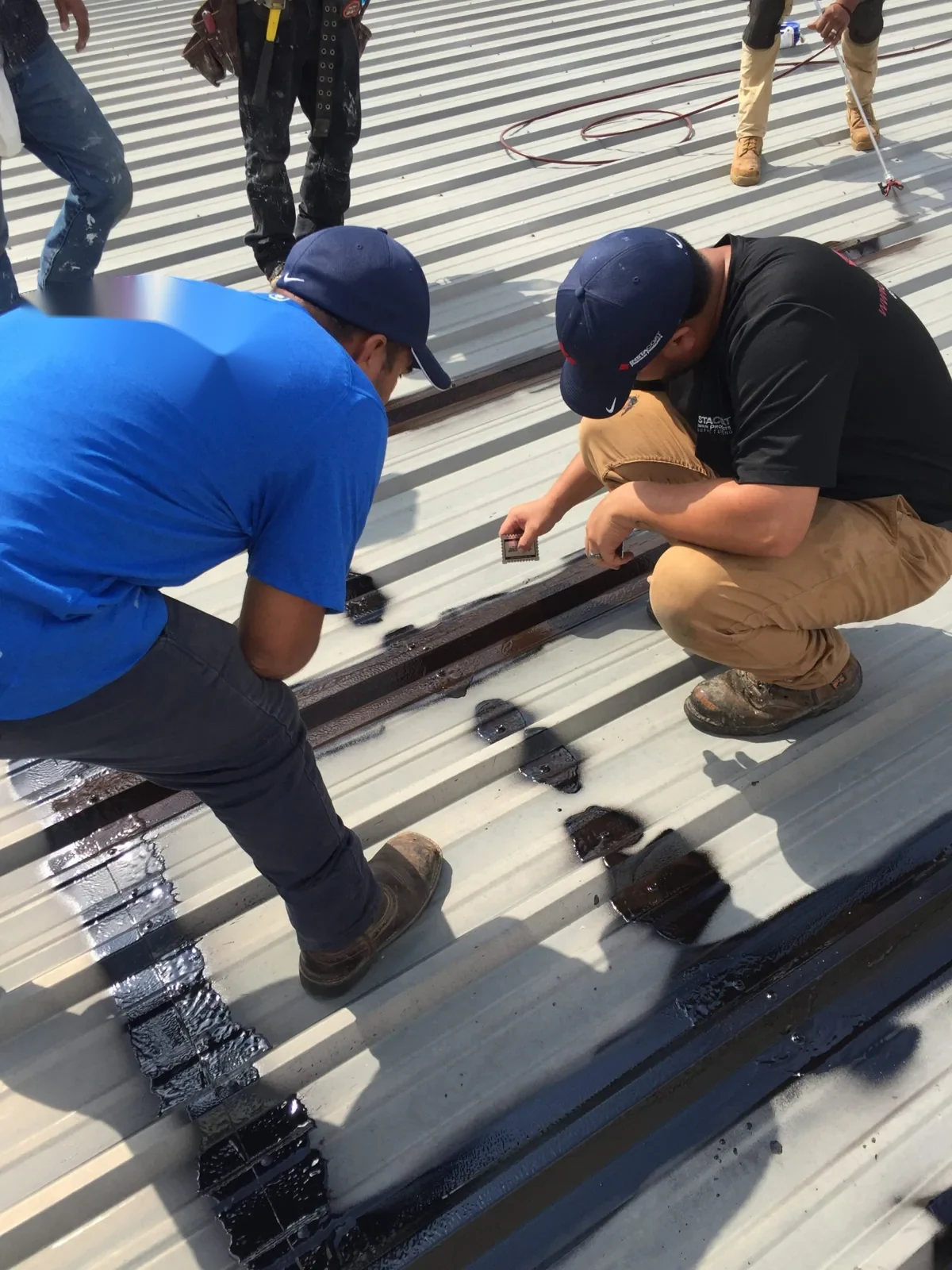
The drone does not replace the walk. It points the walk to the right places. We still probe seams, pull drain screens and cut a core where moisture is suspected. The two together are faster and safer than either alone.
Monsoon and the rest of the year
Monsoon season in the Prescott area runs from July to September, with rain, wind, hail and thunderstorms. On July 20, 2026 a monsoon cell carried a downpour, strong wind and pea-sized hail across Prescott Valley, taking signals and trees down. Spring Valley lies lower, at 3,944 feet against Prescott Valley's 5,100, and we plan for the same summer storm pattern.
A routine of two visits a year suits this region. One before the monsoon to clear drains and tighten edges. One after leaf fall to check flashings and seal what the summer loosened. Dated photos from each visit become the roof's history.
Papers that protect an owner
A warranty file is only useful if it is complete. Many warranties require periodic inspection and prompt repair, and the owner has to prove both. We keep the findings sheets, the photos and the repair dates in one file, so a claim can be supported with dated evidence. If a wind event damages a roof, those records show the condition before and after.
Nearby work in Mayer and Dewey-Humboldt follows the same format, which helps owners with more than one building compare roofs on equal terms.
After a high-wind event, speed matters for the record. Take photos of the roof edge and the ground below, note the date and time, and call for a walk. A visit within days captures bent metal and lifted seams while they are still fresh. Our crew adds a dated photo set and a short written note that an insurer can follow.
Commercial Roofing Questions
What is uplift, and why does it matter?
Uplift is the upward pull wind puts on a roof. It is strongest at corners and edges. If fastening there is weak, the sheet can peel from the perimeter inward.
Can a loose edge be fixed before a storm?
Yes. Re-fastening and resealing edge metal is routine work and takes little time. Doing it before the monsoon costs much less than fixing a peeled corner afterward.
How do you work on a roof over occupied rooms?
In sections, with each section closed to weather before the crew leaves. Noise, dust and access are planned with the staff, and a contact person is named for each building.
Does a drone survey replace a roof walk?
No. It maps the surface and shows where to look. The walk checks seams, drains and flashing by hand, and a core settles any moisture question.
What do I send before a first visit?
Send the address, any past reports, warranty papers and photos of known problems. We use them to plan the crew, the access and the order of the walk.
What if wind damage is found on only one corner?
Repair that corner and check the rest of the perimeter. Peeling that starts at one corner often points to weak fastening along the same edge. The sheet marks the rest of the line for a closer look.
Request a walk-through
Ask for a roof walk on your Spring Valley building. We will deliver a written findings sheet with photos before any repair is priced.
Request a Roof Assessment
Commercial Roofing Questions
Uplift is the upward pull wind puts on a roof. It is strongest at corners and edges. If fastening there is weak, the sheet can peel from the perimeter inward.
Yes. Re-fastening and resealing edge metal is routine work and takes little time. Doing it before the monsoon costs much less than fixing a peeled corner afterward.
In sections, with each section closed to weather before the crew leaves. Noise, dust and access are planned with the staff, and a contact person is named for each building.
No. It maps the surface and shows where to look. The walk checks seams, drains and flashing by hand, and a core settles any moisture question.
Send the address, any past reports, warranty papers and photos of known problems. We use them to plan the crew, the access and the order of the walk.
Repair that corner and check the rest of the perimeter. Peeling that starts at one corner often points to weak fastening along the same edge. The sheet marks the rest of the line for a closer look.