Roof Documentation for Insurance Adjusters and Restoration Firms in Prescott Valley, AZ
Hail, wind and fire roof findings, dated photo sets and line-item scopes for adjusters, carriers and restoration firms working Prescott Valley, AZ claims.
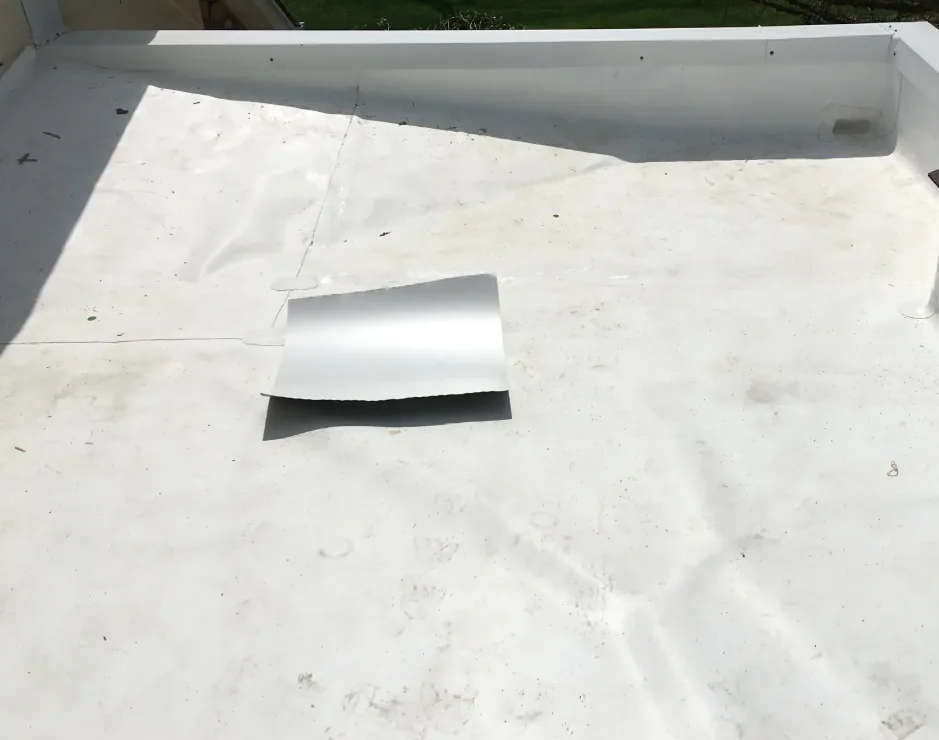
Put your thumb against the membrane near a vent. If it dimples and springs back slowly, that is a bruise. A bruise is what pea-sized hail leaves on a soft roof. It does not leak that day. It leaks after the next freeze. We walk storm roofs in Prescott Valley, AZ, press on the surface, and photograph each bruise before the next storm erases the evidence. Then we send a written findings sheet with dates, locations and photos.
An adjuster needs three things from a roofer. What the roof looked like. What the storm did. What the repair costs by line. We write all three.
What storms leave on a roof here
Monsoon cells in this area bring rain, wind, hail and thunderstorms. The July 20, 2026 cell sent heavy rain, strong wind and pea-sized hail across Prescott Valley, left signals and trees down and cut power for more than 130 APS customers. A separate NWS Flagstaff statement warned of 50 mph gusts and half-inch hail over Dewey-Humboldt.
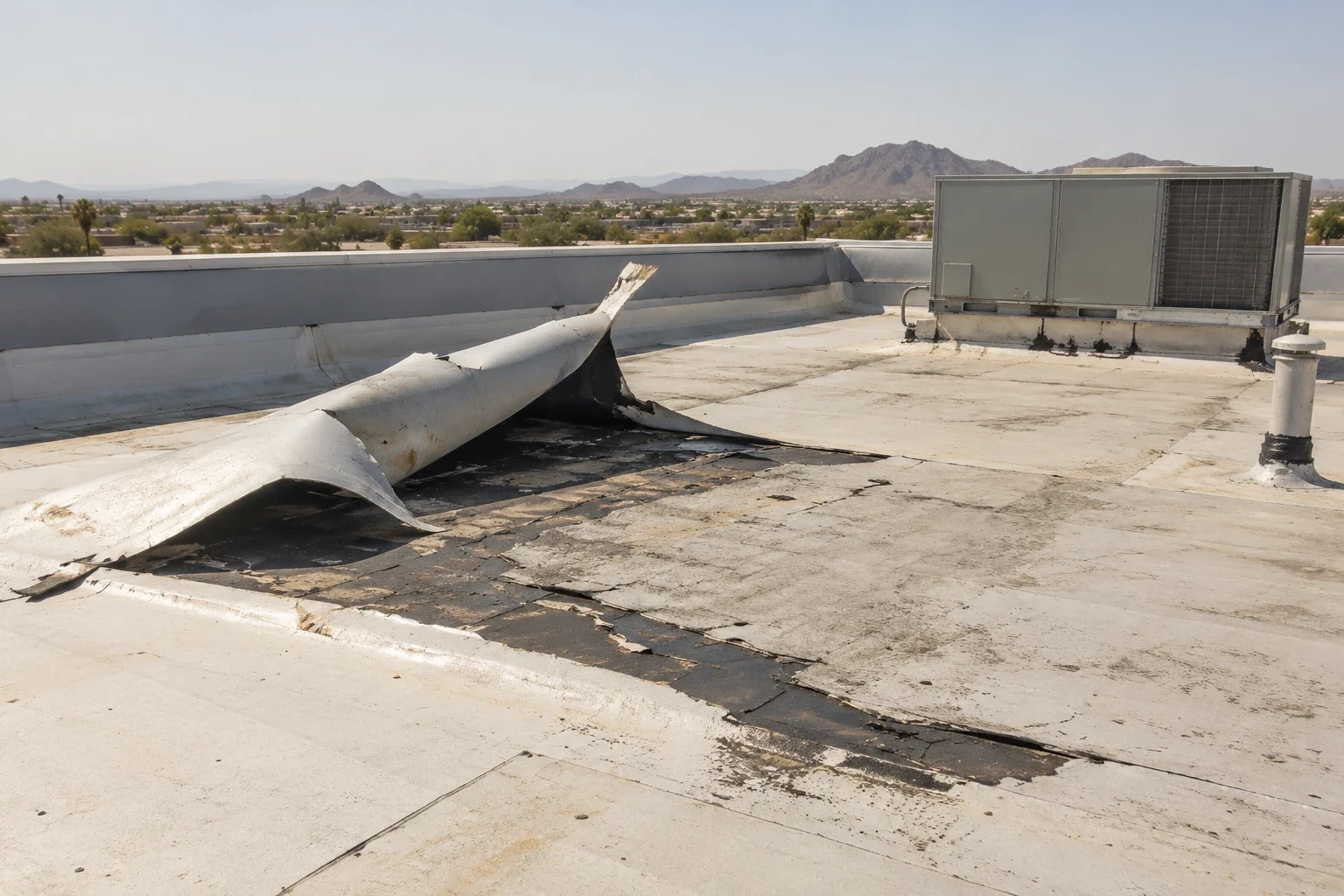
Hail leaves bruises on soft membranes, dents on thin metal and cracked granules on cap sheets. Wind lifts edges, peels caps and moves loose material. On May 6, 2025, a small tornado north of Prescott Valley was videoed ripping a few shingles off a roof. Debris from one roof can land on another.
Water follows. A lifted edge or a bruised spot lets rain in. Drain screens packed with gravel, leaves and hail make ponds. A ponding line marks where water sat.
Metal roofs show different signs. Hail dents panels and ribs. Wind lifts caps and ridge pieces. Thin metal can crease at a fastener row. We photograph dents with a straight edge and a scale, so the depth is visible. We also check laps and fasteners, since wind can loosen them without leaving a mark.
Separating the storm from old wear
Carriers generally pay for sudden events, not for age. A roof here carries both. The freeze season, late October to May 1, and daily swings near thirty degrees wear seams and flashings every year. A cracked sealant bead may be old. A fresh dent in a vent cap is not.
We record both and label them. Fresh damage shows in debris patterns, the direction of displaced material, clean breaks and bright metal at a fresh dent. Old wear shows in dirt in the crack, oxidized edges and rust. Each finding gets a photo, a location on a plan and a date.
That gives the adjuster something to check. It also gives the owner a plain reason why some items are in the claim and others are maintenance. Our claim documentation follows the same structure each time.
One more point on records. Before a storm, a roof photo set is the best evidence of condition. After a storm, it is the only way to show change. Owners who keep a dated set from each spring and fall walk, as in a preventive maintenance plan, have a baseline that makes the next claim simpler. If no baseline exists, we build one from what we see and say which parts we could not confirm.
Hail on commercial roofs
Hail is the most debated item. A bruise on a TPO sheet can hide a cracked insulation board below. A dent on a metal panel may not leak, but it marks a seal that will fail first. A slight crack in granules on a cap sheet exposes asphalt to sun.
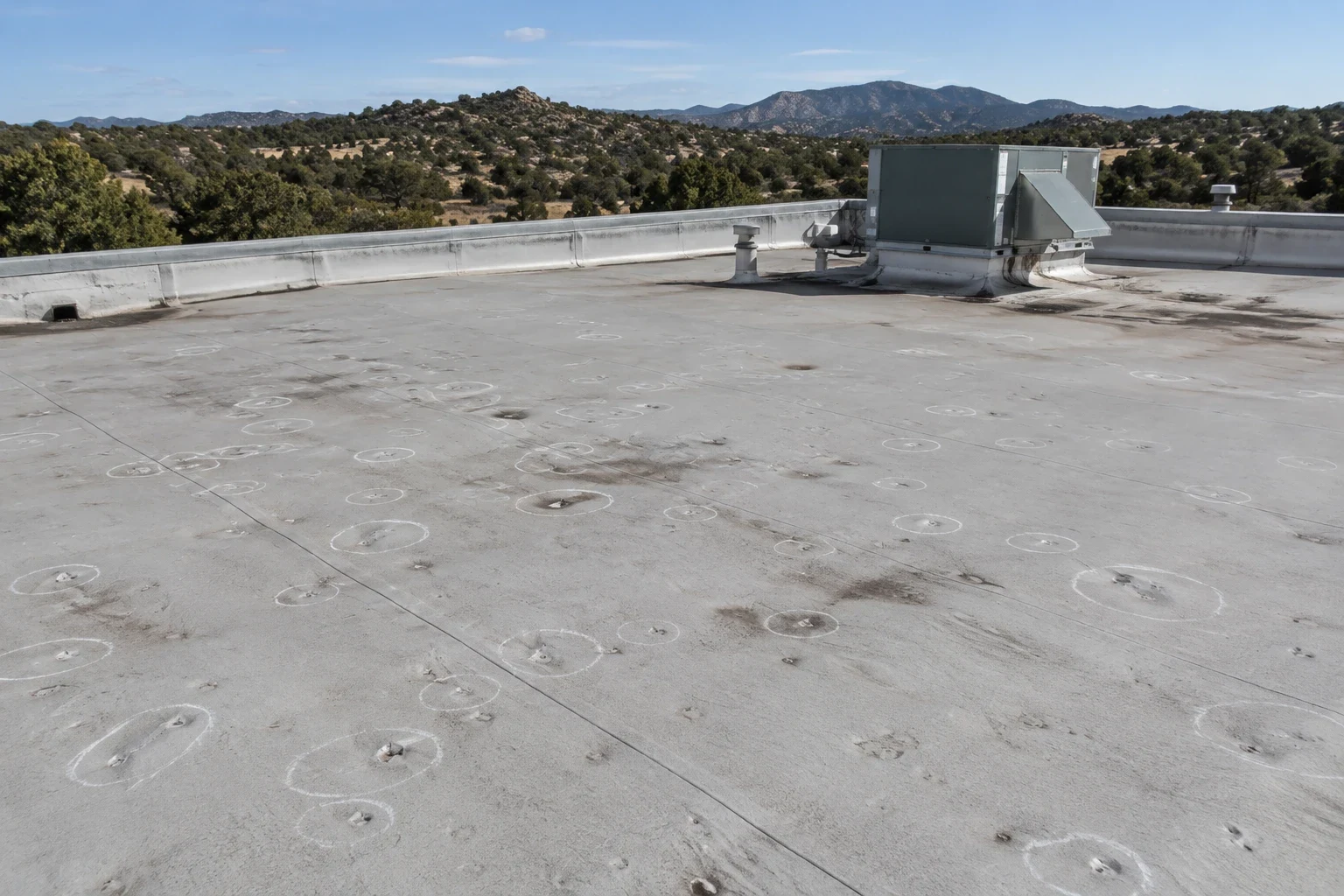
We press, probe and, when allowed, take a core. The core shows if the insulation is cracked or wet. We map hits by count per section. A test square, marked on the roof, shows hits per area. Photos with a scale reference let the adjuster measure.
Our hail damage repair work starts with that map. The repair scope follows it, with quantities by section. If only a few spots are hit, the scope is a set of patches. If many are hit, the scope moves toward a section or a roof.
Wind, fire and debris
Wind damage starts at the edges. Caps, edge metal and the first rows of membrane take the load. Our wind damage repair begins with securing the perimeter and removing debris, then documents displaced material and any membrane pull. A drone pass shows a large roof quickly, and keeps people off a wet or icy surface.
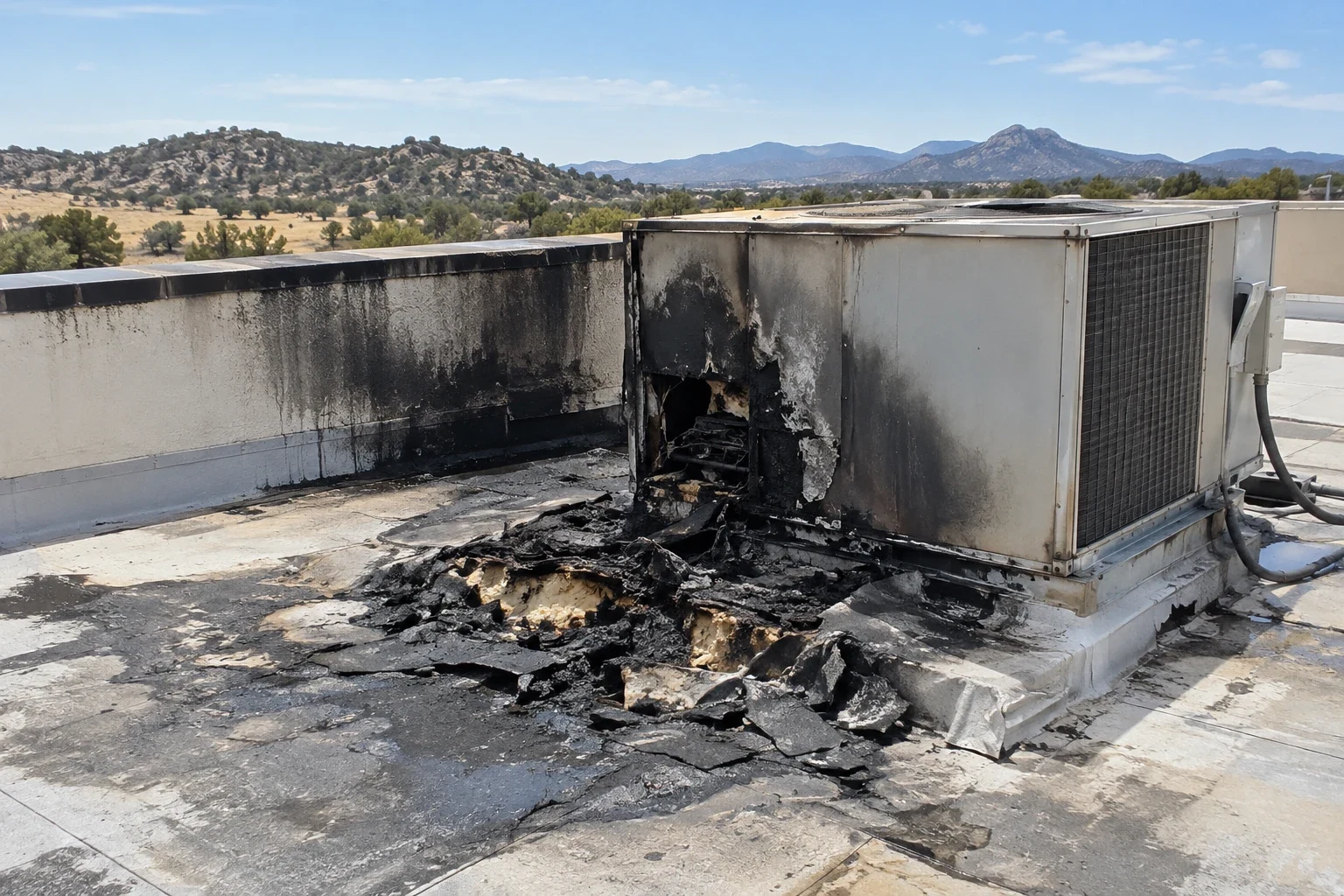
Fire is a different file. The 2017 Goodwin Fire closed Highway 69 between Mayer and Dewey-Humboldt and destroyed about five structures. Fire damage reaches past the burn. Heat softens membrane and insulation, smoke leaves residue, and suppression water soaks the assembly. We map the damage in zones and recommend a structural review where decks or framing show heat stress. Our fire damage roof repair separates emergency protection from permanent work.
The same discipline works for flood. Prescott's record includes a 1983 deluge of 14.5 inches in under 48 hours and flooding again in 2004 and 2018. A dry roof can sit over a building that took water at ground level, and the report notes which damage came from above.
The first day after a loss
The first visit has three jobs. Make the roof safe. Stop the water. Photograph everything before it moves. We answer at any hour. Emergency roof repair starts with temporary measures: tarps, sealing and drain clearing. Each is priced as temporary, so the carrier sees what was done to limit loss and what remains.
A written log shows who did what and when. Receipts, crew times and photos belong in it. For critical buildings, such as clinics, we also talk to facilities about which rooms are at risk. A clinic gets healthcare systems treatment, with a talk about which rooms are at risk.
In a mixed set of claims after a storm, we work from the highest consequence down. An adjuster is not asked to wait for the least urgent site.
When the loss involves a rebuild, we work with the general contractor so the roof sequence matches the interior schedule. A roof that is dry before drywall goes up saves a second loss. We also give the restoration firm a dated plan, so drying equipment is not left running under a leaking deck.
What to ask for in writing
Ask for a findings sheet with photos, dates and a roof plan. Ask for a scope with quantities and unit prices. Ask that temporary work is on its own line. Ask that old wear is labeled as old wear.
Ask for a joint walk if you want one. We bring the photo set so both sides start from the same record. Dewey-Humboldt and Mayer fall within the same service area as Prescott Valley.
Commercial Roofing Questions
Can you meet the adjuster on the roof?
Yes. We schedule a joint walk when the carrier asks for one. We bring the dated photo set and the roof plan, so both sides see the same record. Access and safety gear are set in advance.
How soon after a storm should the roof be walked?
As soon as it is safe. Dust and debris move, and a second storm can erase hail marks. A drone pass gives a first look when the surface is wet or icy. We follow with a walk and a test square.
What if the carrier approves less than the full repair?
We give the owner a written list of what is covered and what is not, with a price for each. The owner then picks the full repair now or the covered part first. Items not covered stay on the list with their prices.
How long do temporary repairs hold?
Through ordinary weather, usually. A second storm can test them. We note an expected life for each measure and suggest a check after any major wind or hail.
Can restoration firms work below once the roof is dry?
Yes. Once the roof is dried in and the entry points are sealed, we tell the restoration firm when interior drying and demolition can start without more water coming in.
Request a walk-through
Ask for a walk-through of the loss. We will send a written findings sheet with dates and photos before we price any repair, and we will separate storm damage from old wear.
Request a Roof Assessment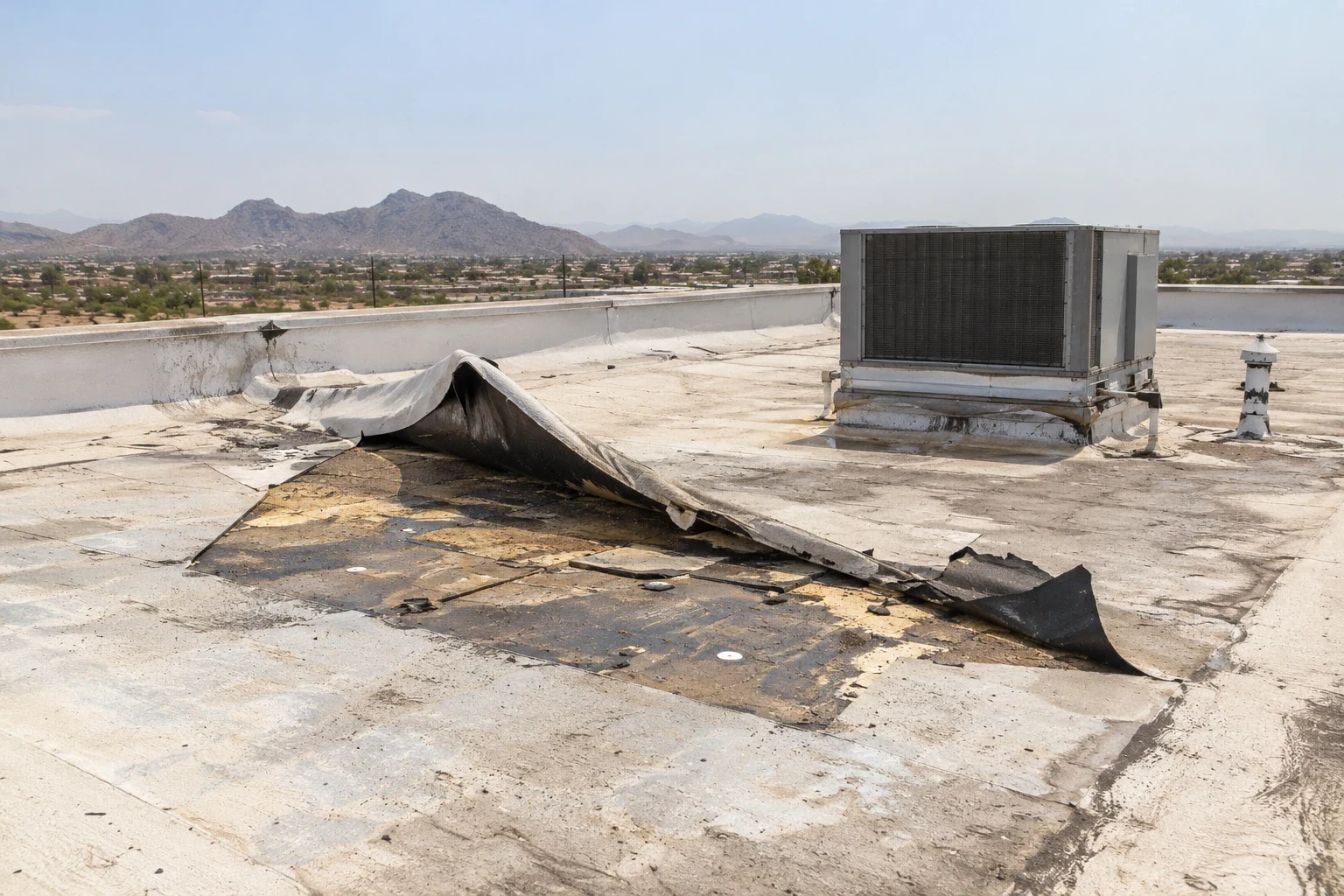
Commercial Roofing Questions
Yes. We schedule a joint walk when the carrier asks for one. We bring the dated photo set and the roof plan, so both sides see the same record. Access and safety gear are set in advance.
As soon as it is safe. Dust and debris move, and a second storm can erase hail marks. A drone pass gives a first look when the surface is wet or icy. We follow with a walk and a test square.
We give the owner a written list of what is covered and what is not, with a price for each. The owner then picks the full repair now or the covered part first. Items not covered stay on the list with their prices.
Through ordinary weather, usually. A second storm can test them. We note an expected life for each measure and suggest a check after any major wind or hail.
Yes. Once the roof is dried in and the entry points are sealed, we tell the restoration firm when interior drying and demolition can start without more water coming in.